The Living Source.
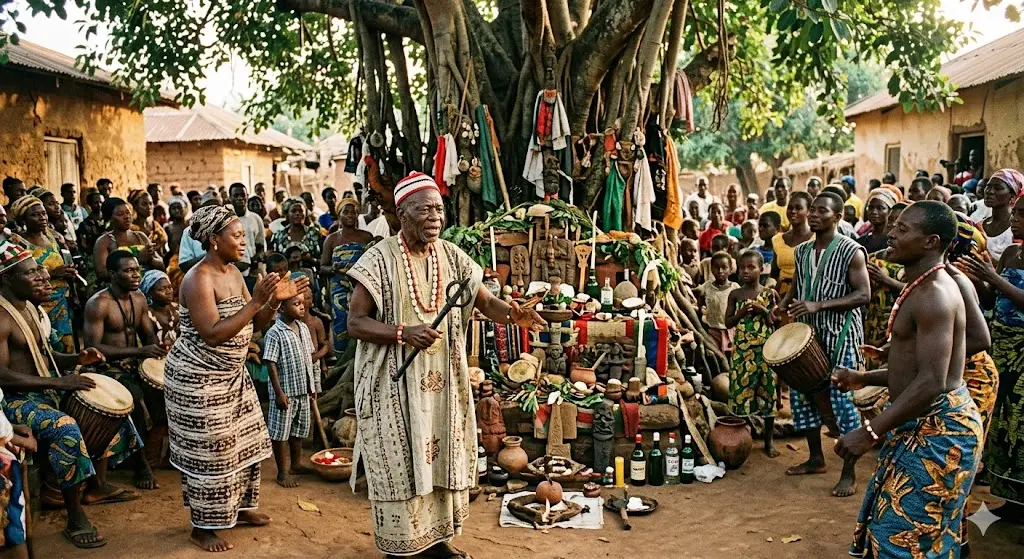
For centuries, African Vodun has been systematically misunderstood, maligned, and reduced to a caricature by Western pop culture. The word itself—originating from the Fon and Ewe languages of West Africa—simply means “spirit,” “deity,” or “the sacred source of life.” It is not a system of dark magic, but rather a sophisticated, holistic philosophy that explains the human relationship with nature, the cosmos, and the unseen ancestral forces that govern our lives.Born in the vibrant coastal regions of modern-day Benin, Togo, and southwestern Nigeria, Vodun is an ancient, living matrix of theology, medicinal science, artistic expression, and community justice. It operates on a fundamental truth: the spiritual and physical worlds are completely intertwined. Every plant, river, thunderstorm, and human breath carries a spark of the divine.
The Pillars of Vodun Heritage
Our platform serves as a digital bridge to the authentic, lived realities of Vodun communities. We focus our educational and preservation efforts on four core foundational areas:
Philosophical Cosmology
Vodun is fundamentally a monotheistic religion. At its absolute apex sits a single, supreme creator deity—often conceptualized as the divine duality Mawu-Lisa (representing the perfect balance of feminine and masculine, moon and sun, coolness and heat). The creator delegated the day-to-day governance of the universe to specialized cosmic energies known as the Vodun. From Legba, the master of the crossroads and communication, to Mami Wata, the sovereign queen of the waters, these entities represent the elemental forces of our world.
Sacred Ecology & Indigenous Science
Long before modern conservation movements, Vodun communities established Sacred Forests governed by ancestral laws that strictly prohibit clear-cutting and overhunting. In our heritage catalog, we document how Vodun operates as an ecological priesthood. Furthermore, we explore the deep ethnobotanical science practiced by Bokonon (diviners and healers) who utilize the complex binary code of Fa Divination—a 256-pattern system of geometric philosophy—to diagnose psychological, physical, and community ailments.
Ancestral Lineages & Living Temples
The heartbeat of Vodun is sustained by its human guardians. We honor the Hunon (high priests), Mamissii (high priestesses), and community elders who have preserved oral histories, ritual music, and sacred lineages through generations of colonial suppression. Through ethical documentation, we highlight the living temples of West Africa and the vital role of traditional civil guardians like the Zangbeto (the nightwatchmen) in maintaining social peace and community-led justice.
The Global Diaspora
When millions of West Africans were captured and carried across the Atlantic during the Transatlantic Slave Trade, they were stripped of their names but not their spirits. In the plantation societies of the New World, practitioners brilliantly masked their deities behind Catholic saints to survive. This strategic resilience gave birth to the rich, beautiful sister traditions of the global African Diaspora: Haitian Vodou, Brazilian Candomblé, Cuban Santería, and Louisiana Voodoo. Vodun was the spiritual catalyst that ignited the Haitian Revolution—the only successful slave revolt in human history—proving that this heritage is inherently a legacy of liberation.
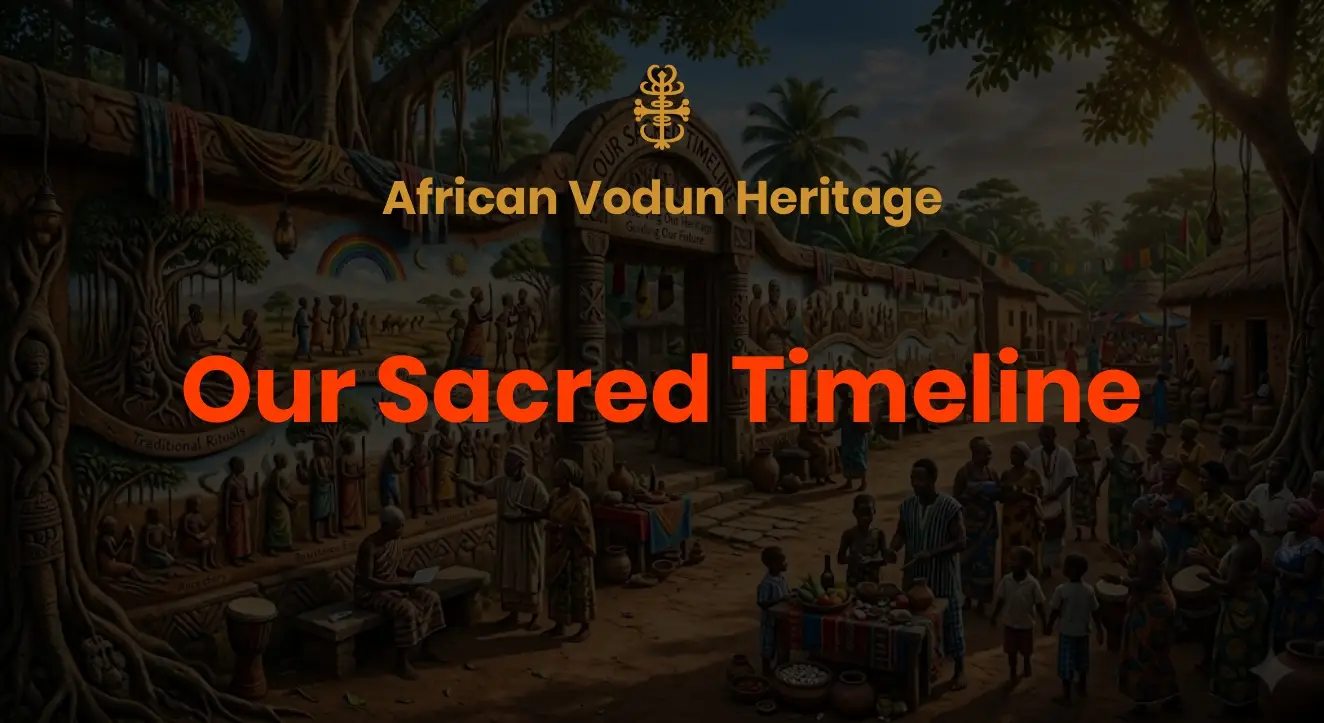
The journey of Vodun is a testament to human resilience. Explore the major historical milestones that have shaped this heritage from its West African cradle to its global impact.
The Era of Centralization
17th – 18th Century
The Kingdom of Dahomey (modern-day Benin) unifies localized elemental cults into a structured national pantheon, institutionalizing priesthoods and establishing grand annual spiritual festivals to protect the state.
The Middle Passage & Adaptation
1518 – 1888
Millions of West Africans carry the seeds of Vodun to the Americas. Under penalty of torture or death, practitioners create hidden systems of syncretism, blending traditional Vodun energies with the imagery of Catholic saints.
The Sparks of Liberation
August 14, 1791
The historic Bois Caïman Vodou ceremony, led by Dutty Boukman and Cécile Fatiman, takes place in Haiti. This sacred covenant unifies enslaved populations and ignites the Haitian Revolution, establishing the world’s first free Black republic.
The Hollywood Distortions
1915 – 1934
During the US occupation of Haiti, sensationalized and weaponized stories enter Western media. Pop culture rebrands “Vodun” as “Voodoo,” inventing fictional tropes like pin-stuck dolls to demonize African indigenous spirituality.
Constitutional Recognition
January 10, 1996
The Republic of Benin officially recognizes Vodun as a national religion, granting it equal legal status with Christianity and Islam. This establishes the annual National Vodun Day, a global celebration of cultural reclamation.
Deconstructing the Myth vs. The Reality
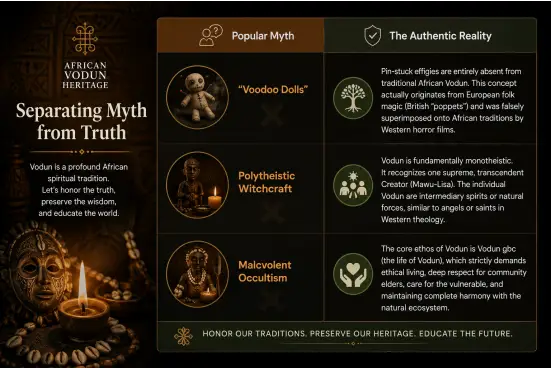
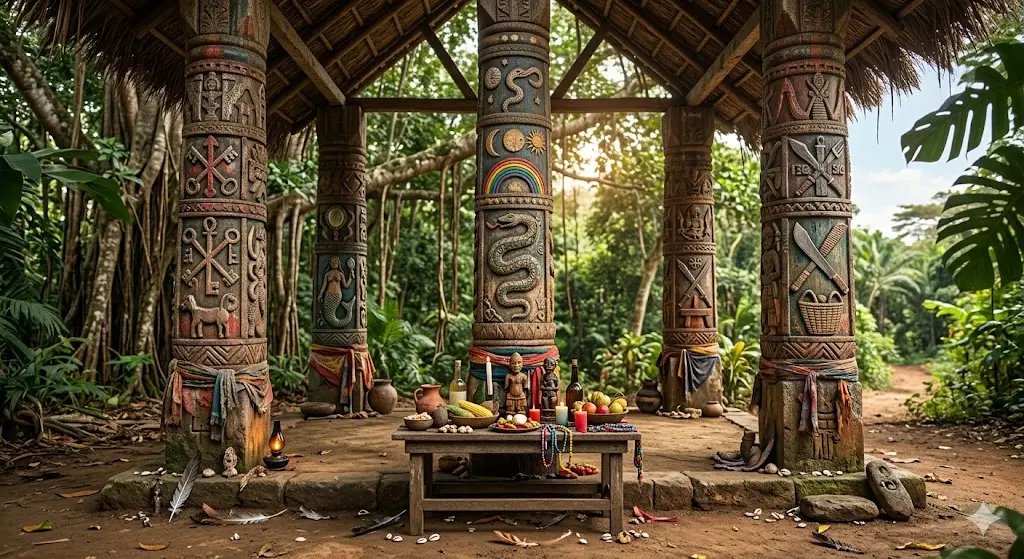
A Note on Sacred Spaces: Altars and Asen (hand-wrought iron ancestral staffs) found within Vodun temples are not objects of idol worship. They act as consecrated spiritual anchors—physical tools where a specific cosmic or ancestral energy is invited to sit, listen, and interact with the physical world.
The Core Path: Your Journey into the Heritage
Deconstruct the Narrative
Unlearn the Stereotypes
Begin your journey in our Media & Literacy Center. Dive into curated essays, historical breakdowns, and documentary archives designed to dismantle Hollywood myths and build an accurate, respectful foundation of knowledge.
Explore the Pantheon & Ecology
Understand the Sacred Forces
Browse our Cosmology Archives to study the individual Vodun deities, their natural element pairs (Earth, Water, Thunder, Air), and the ancient ecological laws that protect West Africa’s disappearing sacred biodiversity hot spots.
Meet the Protectors
Voices from the Living Temples
Listen directly to oral histories, interviews, and teachings recorded ethically and transparently with authenticated Hunon, Mamissii, and Bokonon elders from Benin, Togo, and Nigeria.
Connect with the Diaspora
Trace the Global Lineage
Explore the trans-Atlantic maps in our Diaspora Exchange, illustrating how West African Vodun adapted into the beautiful expressions of Vodou in Haiti, Candomblé in Brazil, and Voodoo in New Orleans.
Step Through the Crossroads
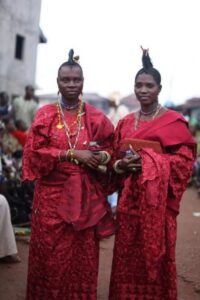
The Role Of Godmothers And Godfathers In African Voodoo Understanding A Sacred Spiritual Tradition
Across many African spiritual traditions, the relationship between a spiritual godmother or godfather is one of the most respected and…
Read More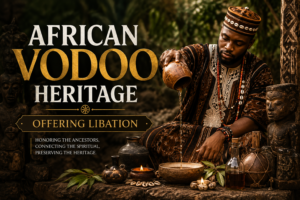
The Power Of Offering Libation In Authentic African Voodoo Traditions Understanding A Sacred Spiritual Practice
Across Africa, one of the oldest and most respected spiritual traditions is the practice of offering libation. For thousands of…
Read More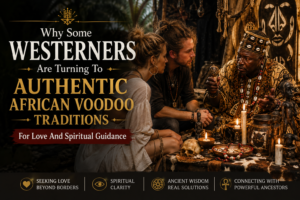
Why Some Westerners Are Turning To Authentic African Voodoo Traditions For Love And Spiritual Guidance
Why Some Westerners Are Turning to Authentic African Voodoo Traditions In recent years, interest in Authentic African Voodoo has expanded well beyond…
Read More
The Power Of Offering Libation In Authentic African Voodoo Traditions Understanding A Sacred Spiritual Practice
Across Africa, one of the oldest and most respected spiritual traditions is the practice of offering libation. For thousands of…
Read More