Ancient roots
Nature-Based Spiritual Origins

Ancestral Foundations of Belief
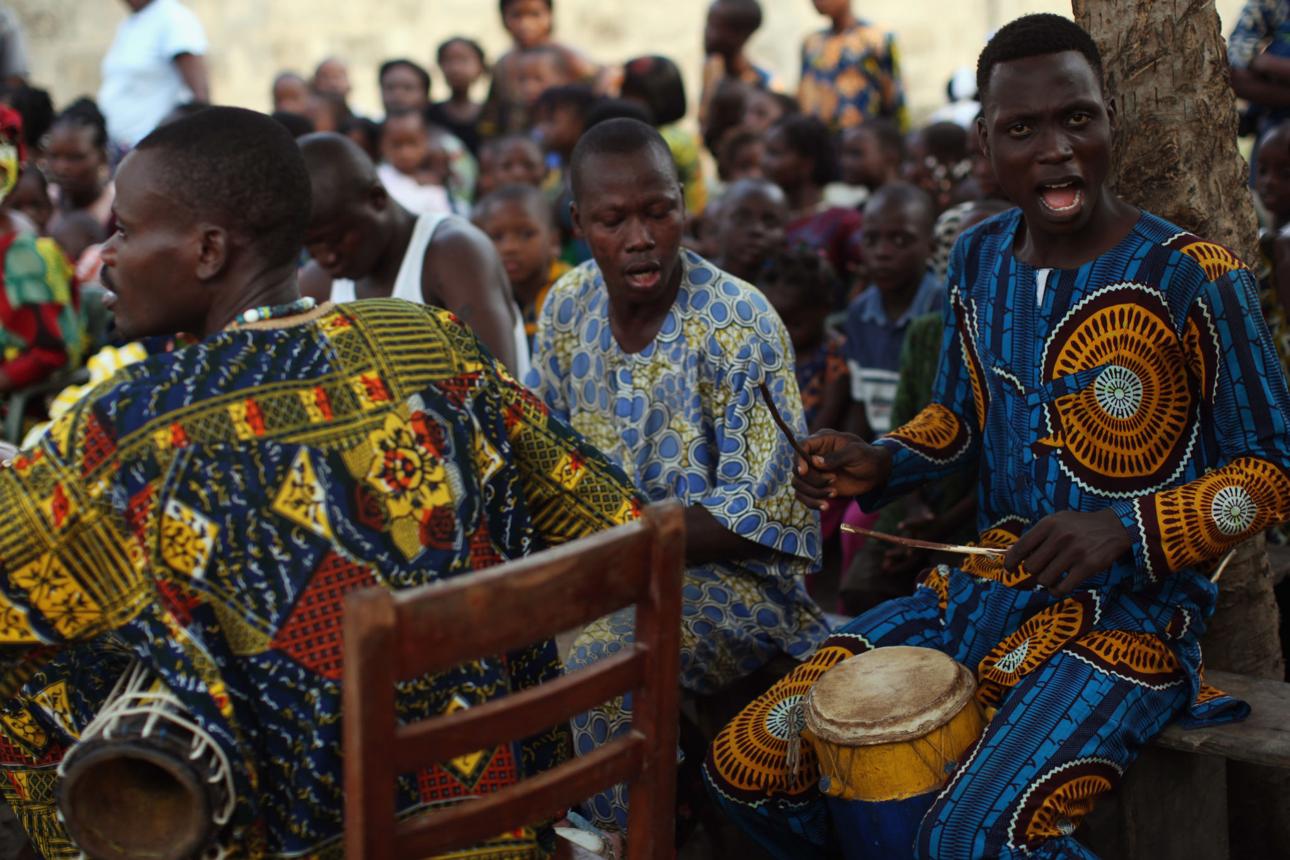
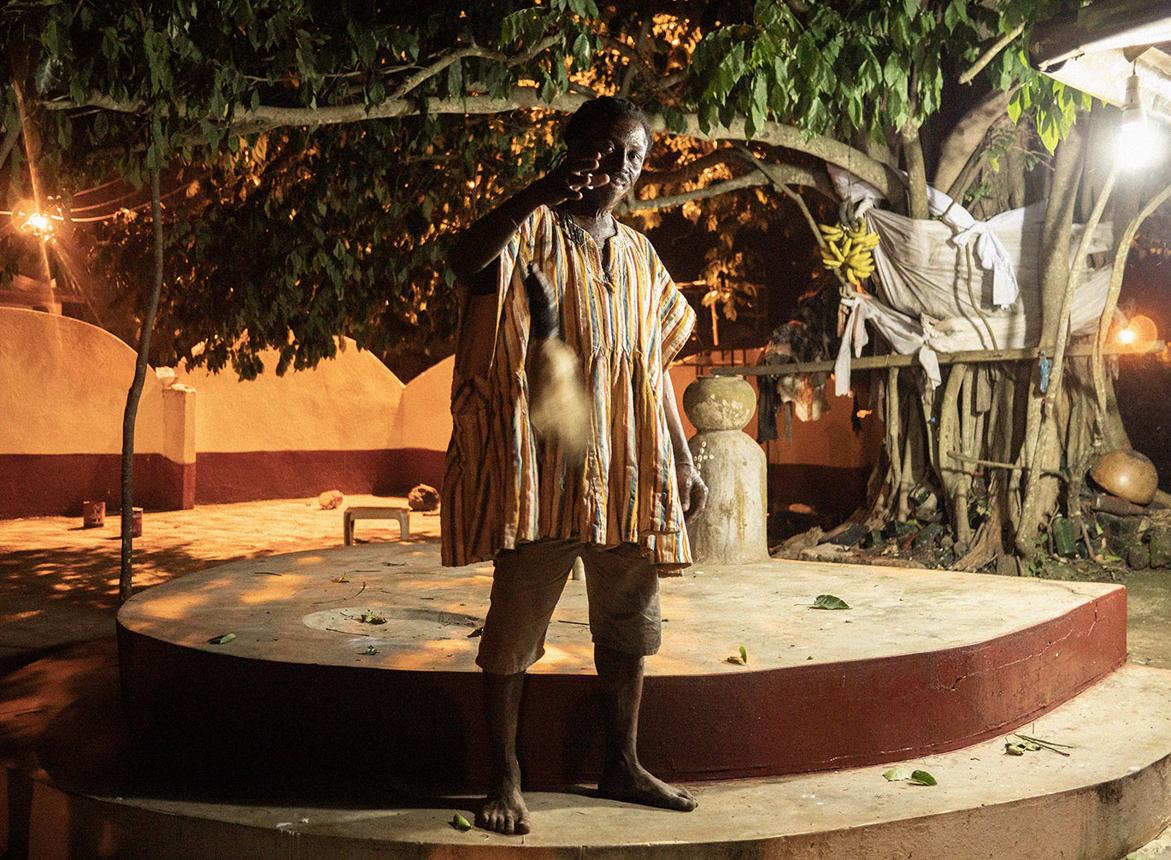
Kingdoms that Practiced Vodun (Africa Voodoo)
The history of African Vodun (Africa Voodoo) is deeply connected to powerful West African kingdoms that helped shape, preserve, and spread its spiritual traditions. Far from being a small local belief system, Vodun was practiced within organized states, royal courts, and structured societies where spirituality and governance worked together.
Some of the most influential kingdoms where African Vodun thrived include regions within modern-day Benin, Togo, Ghana, and Nigeria. These kingdoms integrated Vodun beliefs into their political systems, cultural identity, and daily life.
1. The Kingdom of Dahomey (Benin)
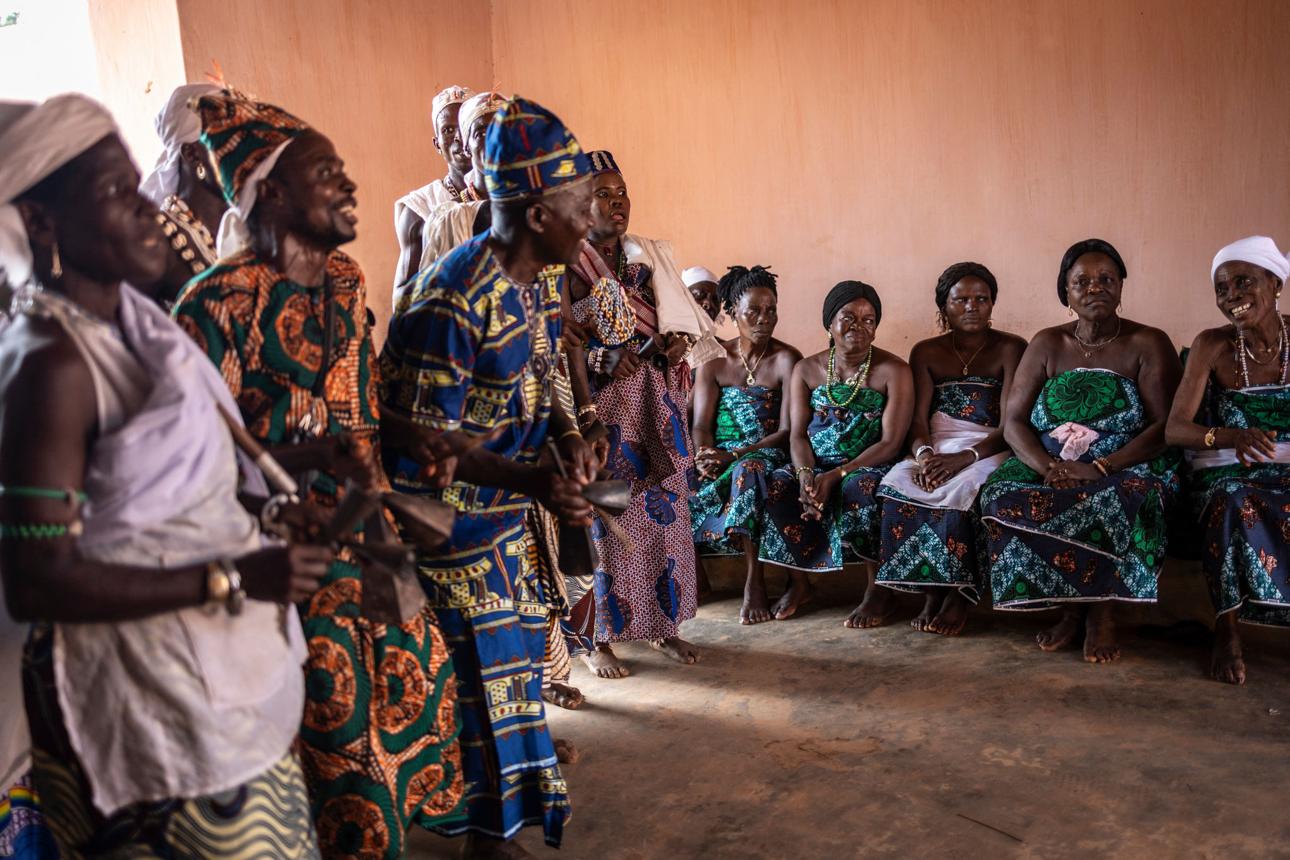
One of the most famous kingdoms associated with African Vodun is the Kingdom of Dahomey, located in present-day Benin. This kingdom is often considered the heart of Vodun development and preservation.
In Dahomey, Vodun was not separate from governance—it was part of the state system. Kings ruled with the support of spiritual priests and royal Vodun deities. Each king was believed to be spiritually connected to ancestral forces, and royal decisions were often guided by divination and ritual consultation.
The kingdom also hosted large Vodun festivals and ceremonies that honored spirits and ancestors, reinforcing unity between the royal court and the people.
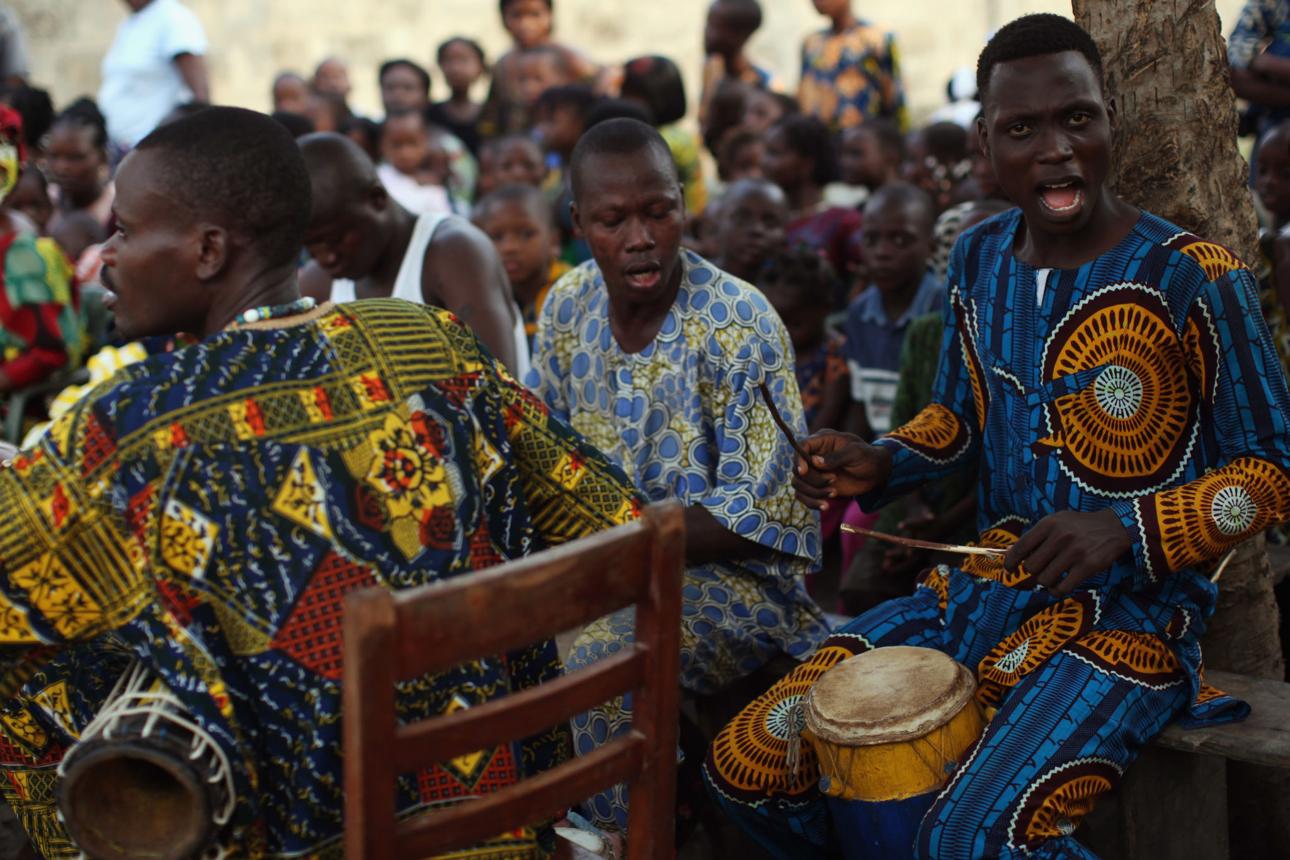
The Oyo Empire (Nigeria)
In present-day Nigeria, the Oyo Empire was one of the most powerful Yoruba kingdoms that practiced a spiritual system closely linked to African Vodun traditions.
The Yoruba religious structure, which shares deep historical ties with Vodun, is centered on spiritual forces known as Orisha—divine energies that govern nature and human life. These beliefs strongly influenced African Vodun practices across West Africa and the diaspora.
In Oyo, spiritual authority was deeply respected. The king (Alaafin) ruled alongside religious leaders who interpreted spiritual guidance for governance, war, and justice.
Akan States (Ghana)
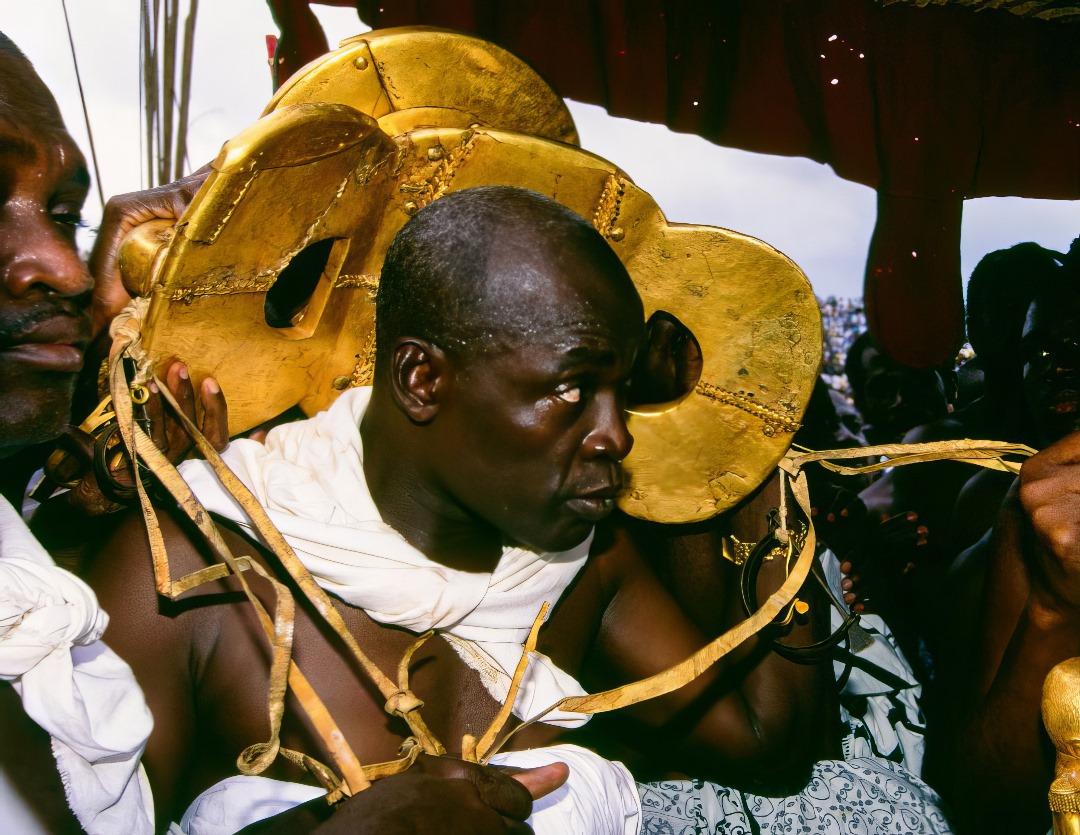
In what is now Ghana, the Akan states also practiced traditional spiritual systems that align closely with African Vodun beliefs. These communities believed in a supreme creator and a wide network of lesser spirits connected to nature and ancestors.
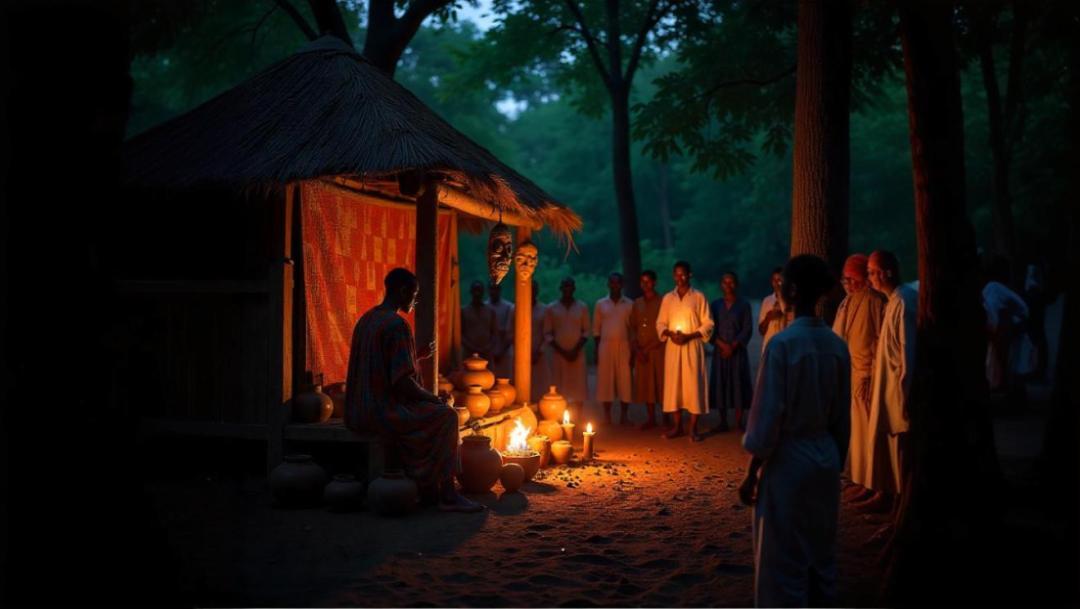
Shrines and sacred groves were central to Akan spiritual life. Priests and priestesses acted as intermediaries between the people and the spiritual world, guiding decisions and performing rituals for protection, fertility, and prosperity.
The Akan also emphasized ancestor worship, which strengthened family lineage and community responsibility.
Ewe Communities (Togo and Ghana)
The Ewe people, spread across Togo and Ghana, are among the most important carriers of Vodun traditions. In Ewe culture, Vodun is deeply embedded in daily life, healing practices, and spiritual rituals.
Each village often had dedicated Vodun shrines for different spirits, and priests played essential roles in interpreting spiritual messages. Healing, protection, and community guidance were all tied to Vodun practices.
The Ewe tradition helped preserve many original Vodun beliefs that later spread across the Atlantic through migration and history.
An In-Depth Introduction to West African Vodun
To approach the history of West African Vodun is to step into a profound, highly organized, and ancient cosmic philosophy. For centuries, this sacred tradition has been obscured by layers of colonial demonization, Hollywood sensationalism, and cultural erasure. Yet, stripped of these external distortions, authentic Vodun stands as one of the world’s oldest enduring spiritual heritages—a sophisticated system of governance, ecological stewardship, psychological resilience, and existential balance born among the Fon, Ewe, and Yoruba peoples of the Bight of Benin.
This comprehensive guide serves as an authoritative introduction to the historical foundations and advanced cosmic frameworks of Vodun. It traces its journey from indigenous West African sovereignty, through the fires of the Transatlantic Slave Trade, to its contemporary global resurgence.
Defining Vodun – Etymology, Essence, and Misconceptions
The Meaning of the Word
In the Fon and Ewe languages of Benin and Togo, the word Vodun (pronounced Voh-doo) does not translate to “sorcery” or “magic.” Instead, it means “spirit,” “the divine force within nature,” or “that which is hidden and sacred.” It represents the invisible cosmic energies that animate the visible, material world.
Dispelling the Hollywood Myth
Before exploring its history, it is vital to separate authentic West African Vodun from the sensationalized pop-culture trope of “Voodoo.” The concepts of “voodoo dolls,” malicious hexes, and mindless zombies are largely cinematic fabrications popularized during the US occupation of Haiti (1915–1934) and later weaponized by Western media to exoticize African spirituality. Genuine Vodun is an inherently benevolent, community-centered faith focused on maintaining harmony between humans, ancestors, and the natural environment.
A Living Cosmic Matrix
As depicted in our communal heritage visuals such as the gathering around the ancient Baobab tree Vodun is a collective way of being. It dictates indigenous medical practices, judicial systems, agricultural cycles, and artistic expressions. It is not a religion of blind faith, but a practical science of relationships—understanding how every action vibrates across the physical and spiritual realms.
The Supreme Architect and the Birth of Dualism
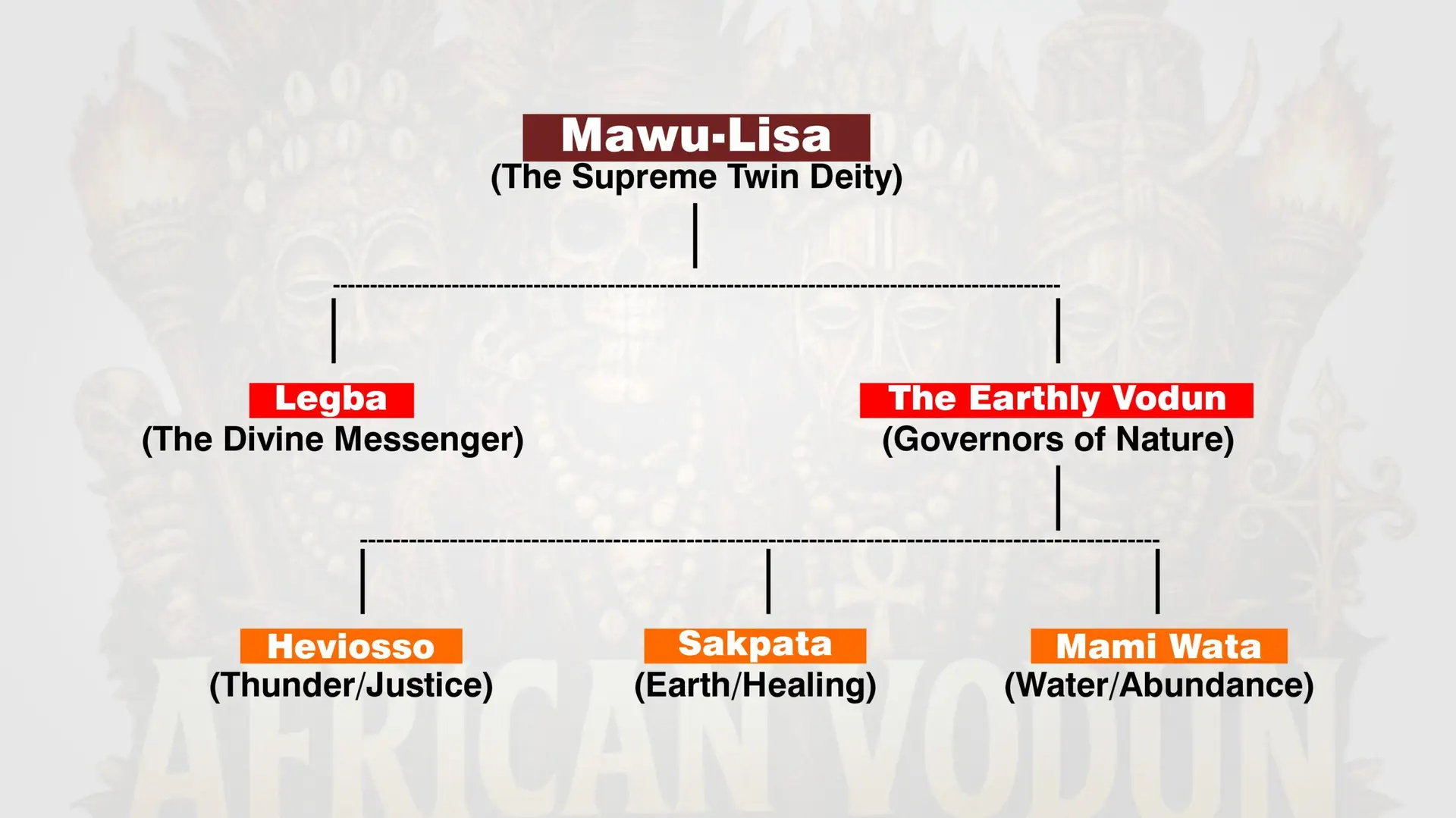
To understand the advanced historical philosophy of Vodun, one must look past the numerous spirits and examine its monotheistic core. Vodun recognizes a single, uncreated Supreme Architect of the universe: Mawu-Lisa (sometimes referred to as Nana Buluku in the older, primordial context).
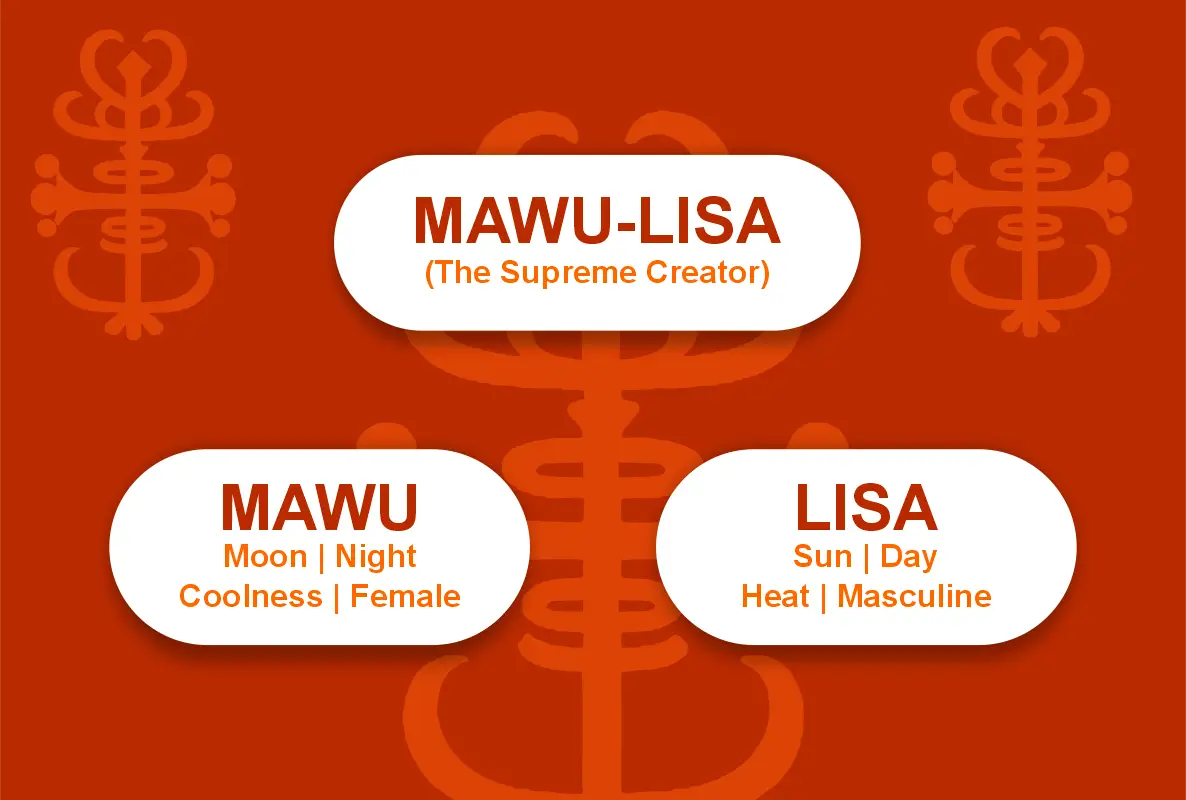
Mawu-Lisa represents an absolute, indivisible cosmic duality:
-
Mawu: The female aspect. She is associated with the moon, the night, coolness, fertility, gentleness, and the collective memory of the night sky.
-
Lisa: The male aspect. He is associated with the sun, the day, heat, strength, labor, steel, and relentless energy.
Historically, the Fon people argued that the universe could not exist without absolute balance. Light requires shadow; creation requires restructuring. Mawu-Lisa does not micro-manage human affairs. Instead, this dual deity birthed and commissioned the Voduns (or Loas)—cosmic ministers and personified forces of nature—to govern the earth and interact with humanity.
The Pillars of Governance – The Royal Shrines of Dahomey
Historically, Vodun was the state religion of several powerful West African coastal empires, most notably the Kingdom of Dahomey (centered in Abomey, modern-day Benin) and the Allada and Xweda kingdoms. Far from being a scattered, disorganized tribal faith, Vodun possessed a rigorous, institutionalized hierarchy.
The Intertwining of Crown and Shrine
In Dahomey, the King (Ahosu) ruled by divine right, but his power was constantly checked and legitimized by the Vodunon (High Priests) and Mami Vodunon (High Priestesses). The royal court directly funded grand national sanctuaries, ensuring that the spiritual pillars of the land.
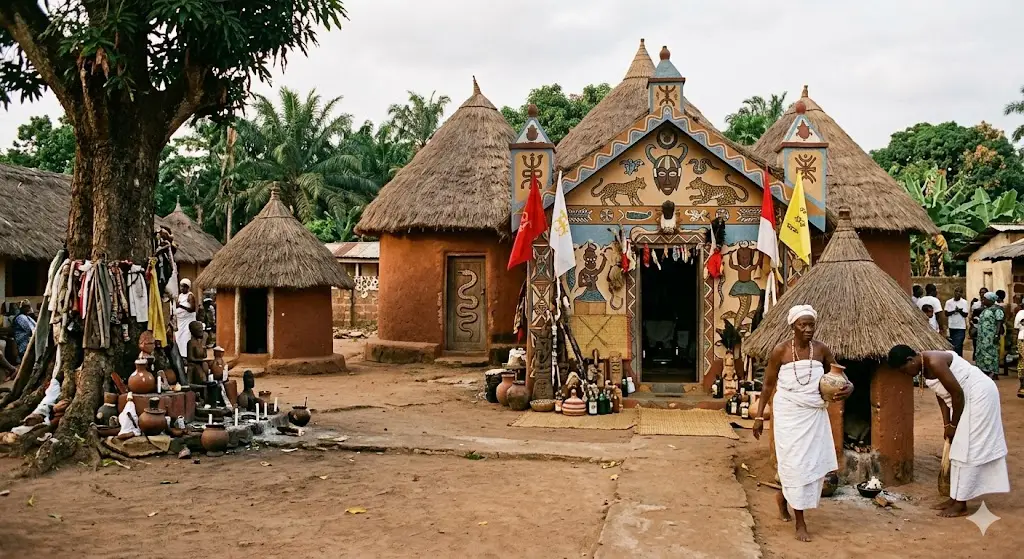
remained structurally sound and spiritually active.
The Spiritual Specialization of Space
Different regions and families were designated as the ancestral keepers of specific cosmic forces:
-
The Earth Pantheon (Sakpata): Governed agricultural fertility, soil health, and infectious illnesses like smallpox.
-
The Sky Pantheon (Xevioso): Directed lightning, thunder, cosmic justice, and divine retribution.
-
The Sea Pantheon (Agwé/Mami Wata): Governed maritime trade, deep-ocean mysteries, and economic wealth.
This highly organized structure meant that Vodun functioned as a complex bureaucracy of the sacred, maintaining social order, regulating commerce, and enforcing complex legal codes across West Africa for centuries prior to European contact.
The Middle Passage, Displacement, and Spiritual Chameleons
The true crucible of Vodun history occurred during the Transatlantic Slave Trade (16th to 19th centuries). Captured from the shores of Ouidah and Badagry, millions of West Africans were packed into the dark hulls of slave ships. Though slaveholders stripped them of their clothes, families, languages, and physical shrines, they could not strip them of the invisible matrix of Vodun.
The Technology of Survival
During the grueling Middle Passage, the shared language of Vodun became a unifying lifeline. Captives from different ethnic groups—Fon, Ewe, Yoruba, Mahi, and Mina—merged their closely related traditions into a resilient, pan-African spiritual shield.
The Catholic Mask (Syncretism)
Upon arrival in the plantations of the Caribbean and the Americas, colonial authorities enforced brutal anti-Vodun laws. Practicing the traditional faith was punishable by torture or death. To survive, practitioners engineered a brilliant psychological defense strategy known as religious syncretism.
They mapped the attributes of their ancient African deities onto Catholic Saints:
-
Papa Legba, the keeper of the gates, was concealed behind Saint Peter (who holds the keys to heaven) or Saint Anthony.
-
Ogoun, the warrior spirit of iron, was masked as Saint James the Greater or Saint George.
-
Mami Wata and water spirits were hidden behind the various apparitions of the Virgin Mary (such as Our Lady of Regla).
To the white plantation overseer, the enslaved Africans appeared to be bowing devoutly to plaster statues of Christian saints. In reality, the practitioners were looking through the statues, singing secret drum rhythms to the ancient, primordial forces of their West African homeland.
The Shield of Rebellion – Freedom and Geopolitical Shift
Vodun was never a passive theology of endurance; it was a radical engine of liberation and armed resistance. Because Vodun teaches that the human spirit is divine and that ancestors stand behind the living, it systematically broke the psychological chains of enslavement.
Bois Caïman and the Birth of Haiti
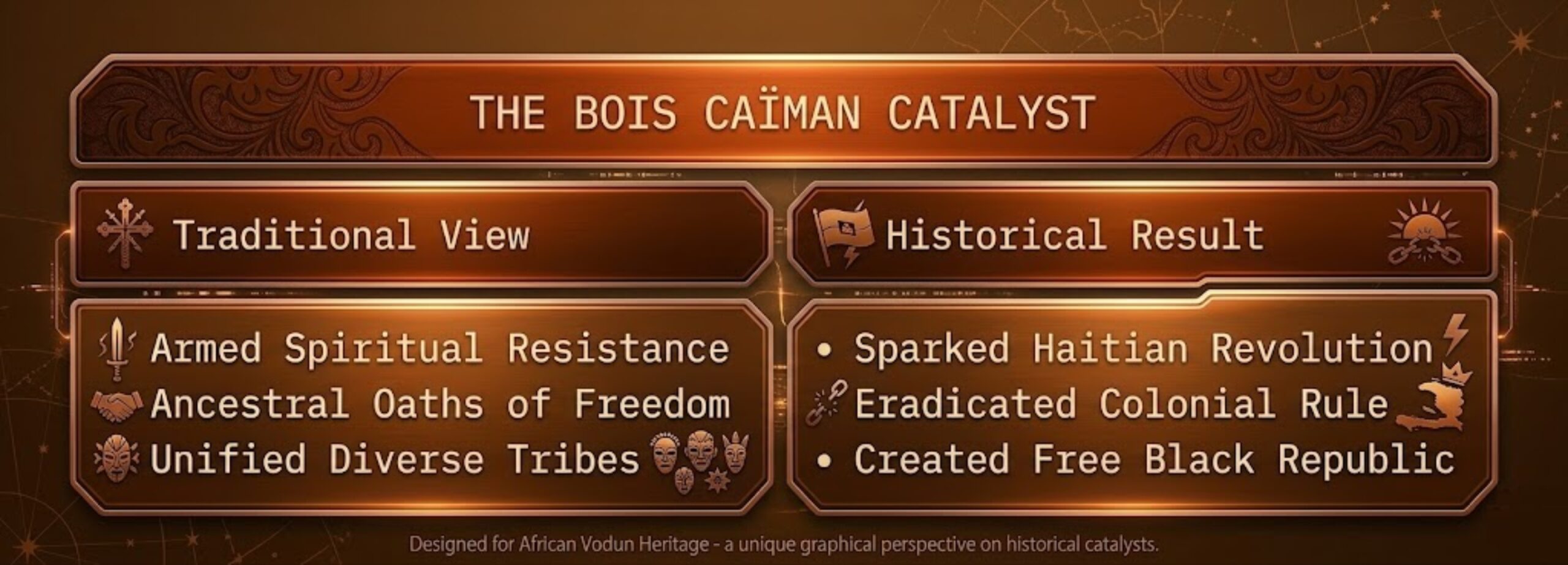
The most monumental historical manifestation of this revolutionary energy occurred on the night of August 14, 1791, in a secluded forest clearing in Haiti called Bois Caïman. Led by a Vodou priest named Dutty Boukman and a high priestess named Cécile Fatiman, a secret gathering of enslaved Africans held a solemn Vodun ceremony.
They swore a sacred oath to throw off their chains, backed by the spirits of their ancestors and the warrior energy of Ogoun. This single spiritual gathering ignited the Haitian Revolution—the only successful slave revolt in human history that resulted in the founding of a free, independent Black republic.
The Demonization Backlash
Following the triumph of the Haitian Revolution, Western colonial empires panicked. To prevent similar uprisings across the Americas, European and American powers launched a centuries-long global propaganda campaign designed to vilify Vodun. It was labeled as “satanic,” “barbaric,” and “evil.” This systematic geopolitical slander is the direct historical root of the negative stereotypes that persist in global media today.
Advanced Concepts – The Living Matrix of Ancestry and Nature
To transition from basic knowledge to advanced insight into Vodun, one must understand its deep ecological, psychological, and spatial philosophy.
1. Sacred Ecology and Animism
In the Western world, nature is often viewed as a resource to be dominated and exploited. In advanced Vodun philosophy, nature is the body of the divine. Every tree, river, mineral, and animal has a unique spiritual frequency.
Historically, certain old-growth forests in West Africa (such as the Zoun or Sacred Forests of Benin) were protected by religious decrees. Cutting down a tree or polluting a stream in these spaces was seen as a direct attack on the Vodun residing within it. Thus, Vodun history is fundamentally an ancient blueprint for modern environmental conservation.
2. The Ancestral Continuity (The Kutito)
In Vodun, death is not a final destination, but a change in energetic state. The universe is viewed as a circular continuum: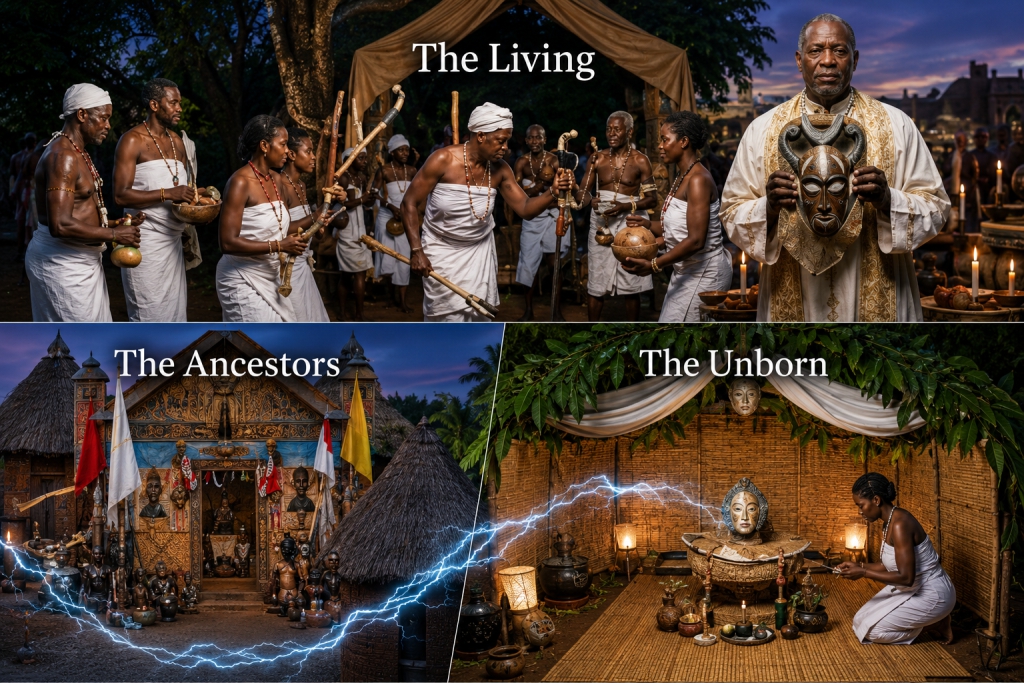
The ancestors (Kutito or Egungun) are not dead; they are simply invisible elders who continue to guide, protect, and discipline their living descendants. As illustrated across the historical murals of our lineage, the living retain a solemn historical obligation to feed the ancestors through offerings, maintain their names, and uphold their ethical teachings.
3. The Crossroads as Cosmic Geography
The most critical advanced symbol in Vodun is the Crossroads (the intersection of two lines). This is the domain of Papa Legba. The horizontal axis represents the material, physical world where humans walk. The vertical axis represents the spiritual world of the gods and ancestors. The center point, where the lines intersect, is the gateway of manifestation. Every choice a human makes, every threshold crossed, and every ritual performed happens at this exact cosmic intersection.
The Modern Renaissance and Global Homecoming
Today, African Vodun is undergoing an unprecedented global renaissance. After centuries of secrecy and persecution, it has stepped out from the shadows into its rightful place as an officially recognized world religion.
Official Recognition in Benin
In 1996, under the leadership of President Nicéphore Soglo, the Republic of Benin officially recognized Vodun as a national religion, granting it the same legal status and dignity as Christianity and Islam. Every year on January 10th, Benin hosts the International National Vodun Day, drawing thousands of practitioners, historians, and tourists from across the globe to the sacred beaches of Ouidah.
The Reconnection of the Diaspora Tree
As beautifully captured in our comprehensive spiritual ecology map, the historical wounds of the Middle Passage are actively healing. Millions of Black diaspora descendants across the Americas and Europe are looking past colonial fabrications to study the authentic, deep roots of West African traditions. They are traveling back to the shrines of Benin, Togo, and Nigeria to re-link their family lineages, undergoing ancestral initiations, and drawing fresh wisdom from The Living Source.
Vodun is no longer a localized coastal tradition; it is a vital, borderless, global ecosystem of spiritual empowerment, ecological consciousness, and historical pride.