The Living Conduit: Rituals, Liturgy, and Cosmic Consecration in West African Vodun
To the uninitiated, a Vodun ritual can seem like a dizzying whirlwind of percussive rhythms, vibrant colors, sudden movements, and dramatic expressions. However, to view these sacred ceremonies from a Western, external lens is to miss the underlying architecture. Beneath the sensory experience lies a highly structured, mathematically precise, and philosophically deep metaphysical science.
In West African Vodun, rituals are not merely symbolic gestures or theatrical performances of faith. They are practical technologies designed to manipulate energetic frequencies, open cosmic gateways, heal psychological fractures, and maintain the delicate equilibrium between humanity, nature, and the divine. This comprehensive guide serves as an authoritative introduction into the liturgical frameworks, ritual tools, and advanced metaphysical operations of authentic West African Vodun ceremonies.
The Metaphysics of the Ritual Space
The Consecrated Universe
In Western theological frameworks, a clear line of demarcation exists between the sacred and the profane. God exists in a faraway heaven, and the physical earth is merely a material stage. Vodun rejects this separation entirely. The physical world is completely infused with spiritual currents. Every rock, tree, river, and crossroads is a potential site of divine manifestation.
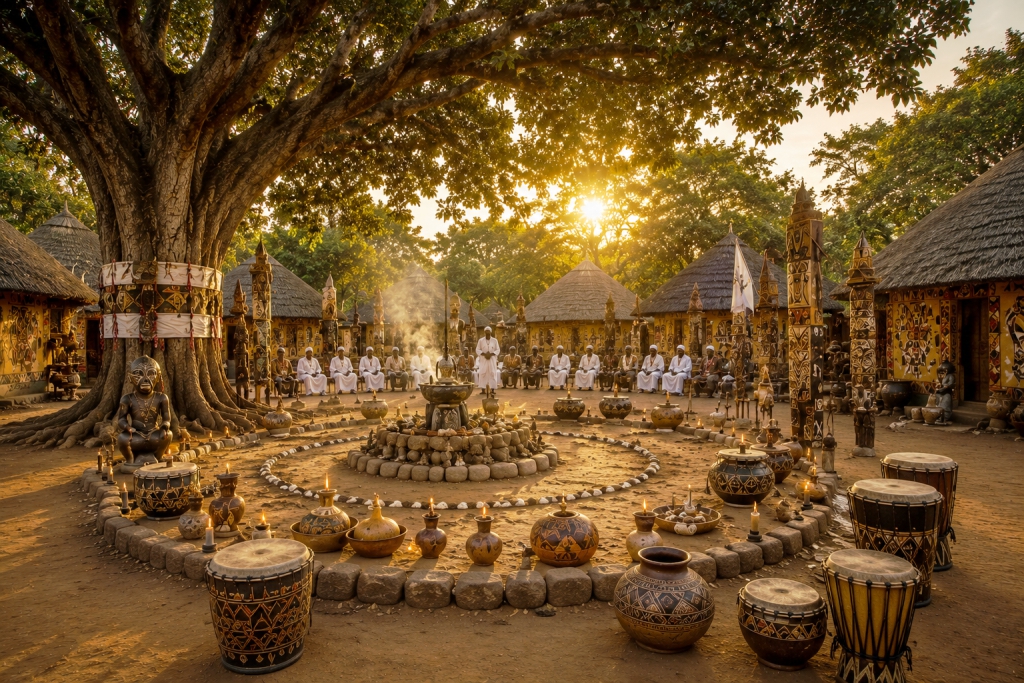
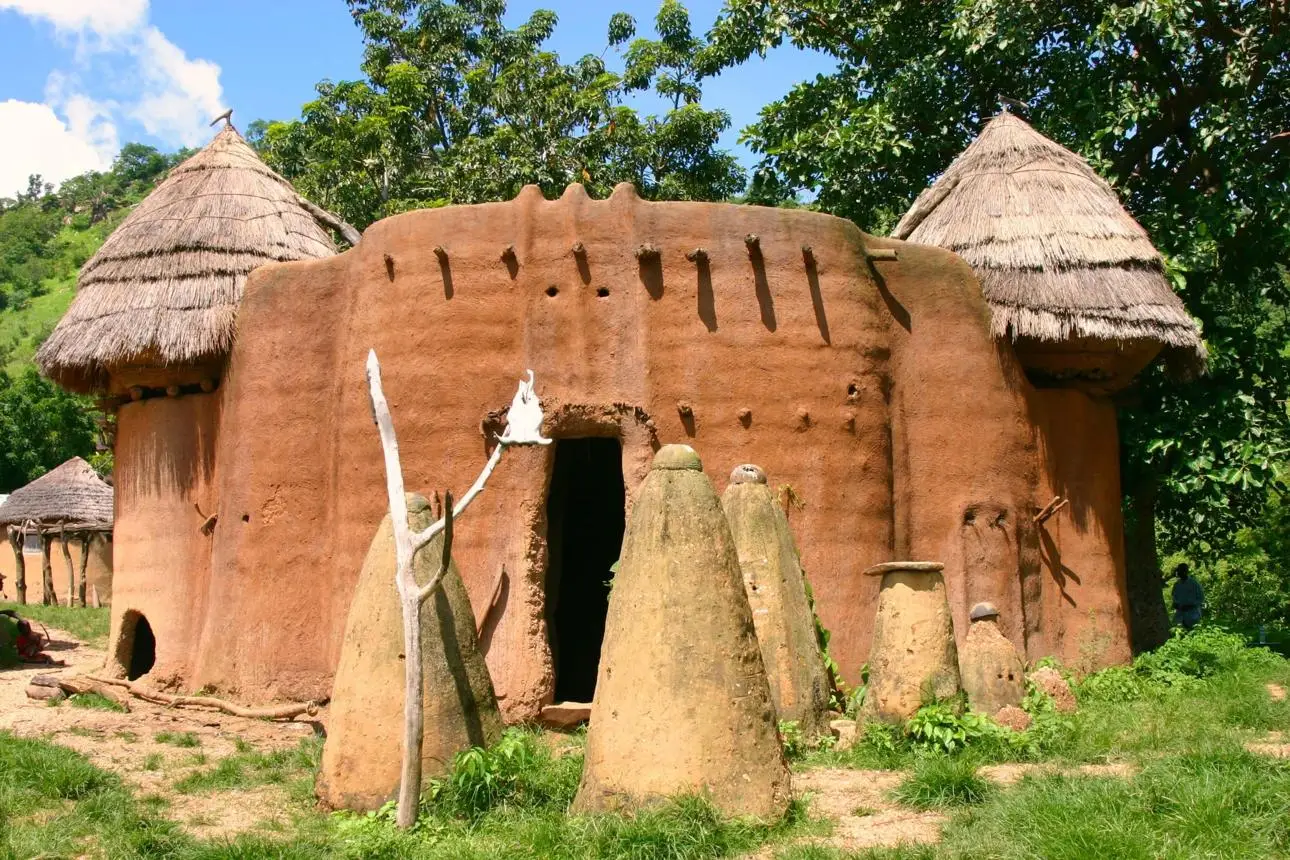
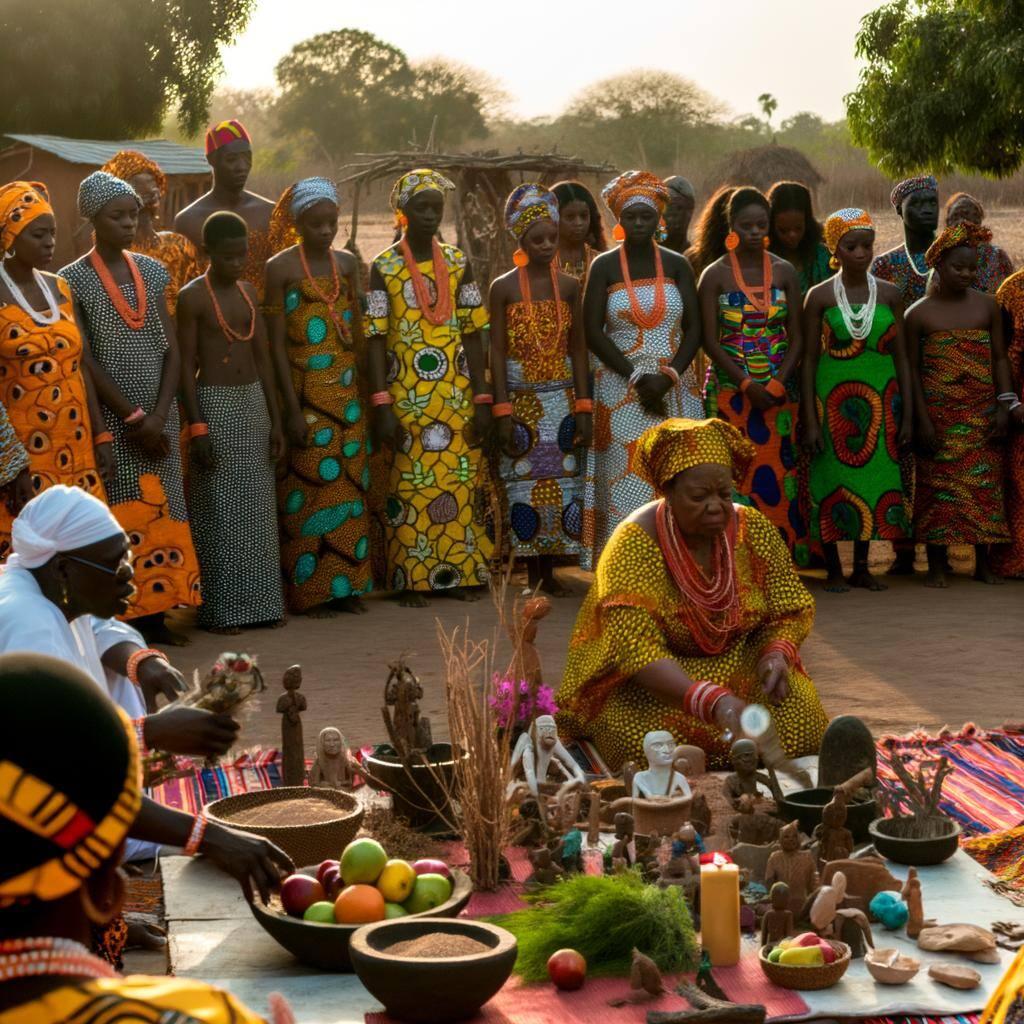
However, because the raw, unshielded power of the Voduns (spirits) is too intense for regular human environments, specific spaces must be structurally and spiritually calibrated to host them. These spaces are known as Hounfours (temples) or Zoun (sacred forests), as beautifully depicted in the ancestral gathering grounds of
The Anatomy of a Shrine (Vassa)
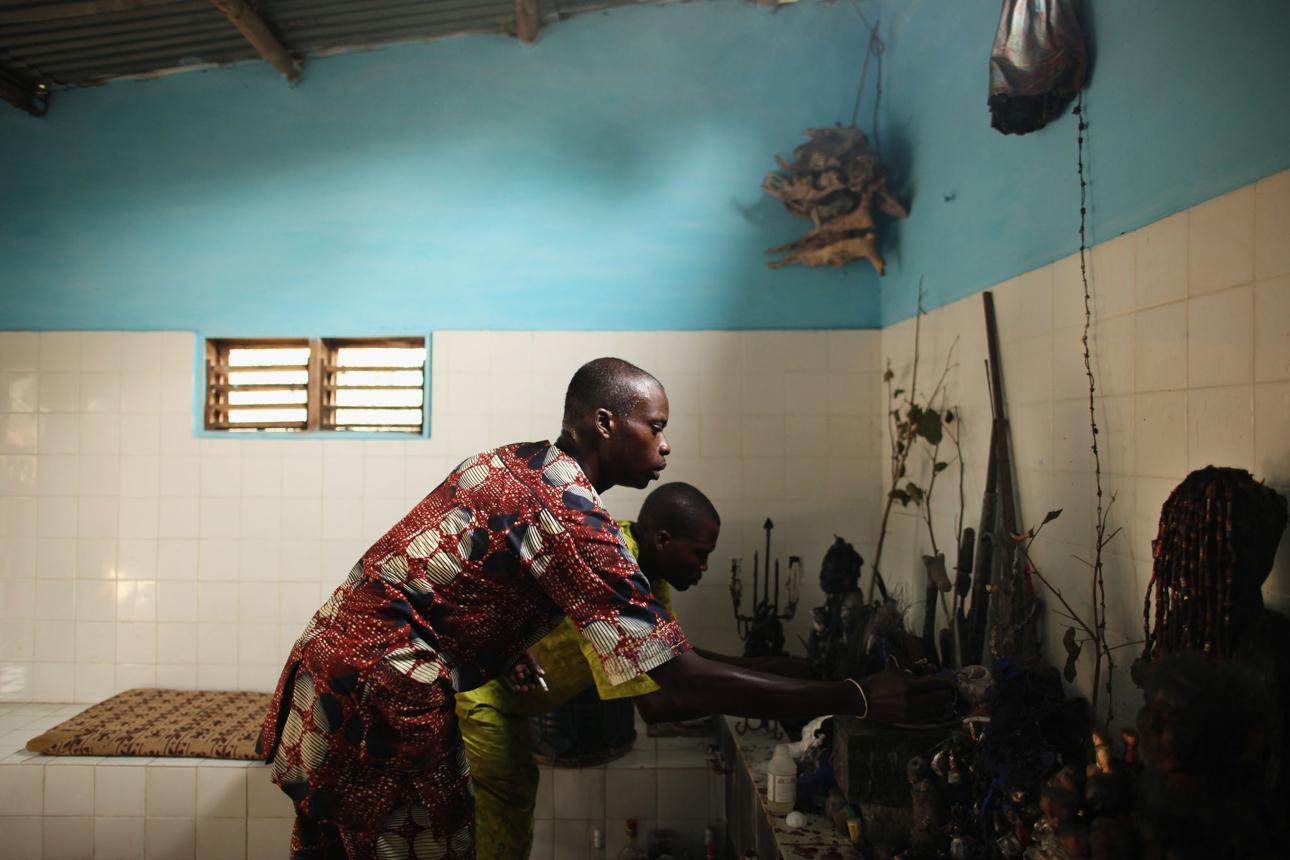
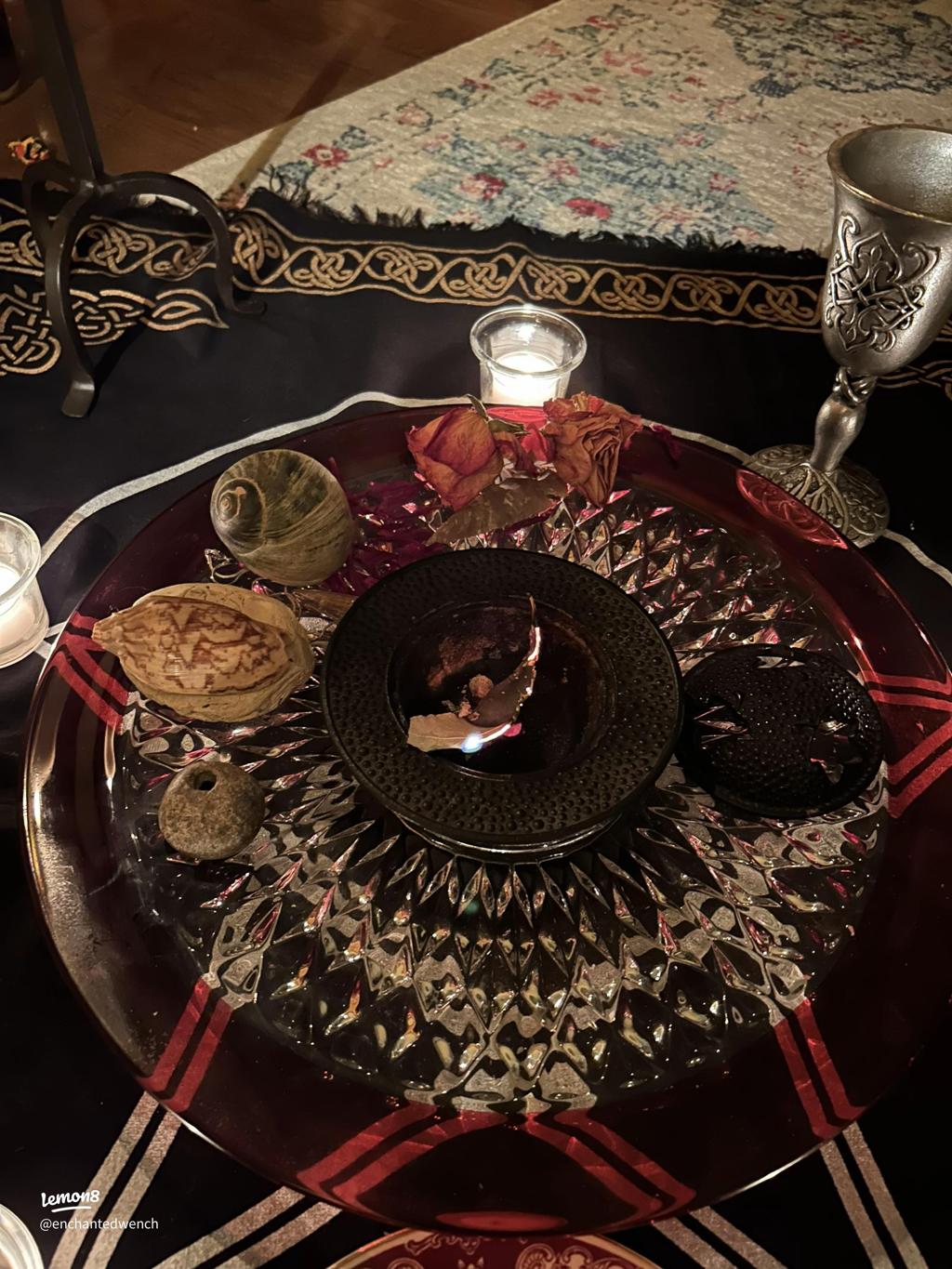
At the center of any ritual space sits the shrine or altar. Far from being a random collection of objects, an authentic Vodun shrine is an energetic engine built using specific elemental principles. Every object placed upon the altar acts as an antenna tuned to a specific cosmic force. For example, a shrine dedicated to Ogoun will feature hand-forged iron, tools, and heavy metals to ground his fiery, industrial energy. Conversely, a shrine for Mami Wata will use sea glass, shells, mirrors, and cool spring water to invite her fluid, expansive presence.
Here is a visual representation of the elemental harmony required to anchor these sacred forces at a traditional shrine: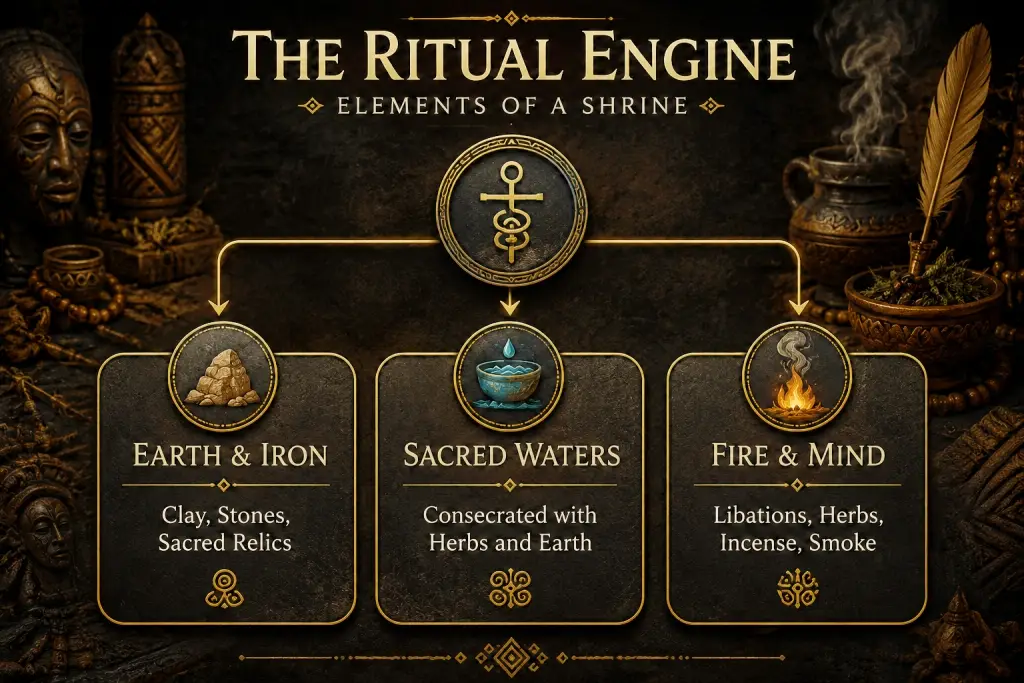
The Liturgical Order of a Ceremony
A genuine Vodun ceremony follows a strict, unyielding liturgical order. One cannot simply conjure a spirit or begin dancing without systematically preparing the cosmic geography. The high priests (Vodunon) and priestesses (Mami Vodunon) act as spiritual engineers, carefully guiding the energy through four distinct phases.
Phase 1: The Consecration and Purification
Before any spiritual forces are invoked, the physical space and the participants must be cleansed of negative, stagnant energies (asé that has gone stale or sour). The ritual floor is swept with sacred brooms, and water infused with purifying leaves is sprinkled across the perimeter. This creates a pristine spiritual vacuum, ensuring that only benevolent, elevated energies can enter the space.
Phase 2: Opening the Crossroads (Invoking Legba)
No Vodun ritual, whether in Benin or the furthest corners of the global diaspora, can proceed without first paying homage to Papa Legba. As the master of the crossroads and the keeper of the spiritual gates, Legba holds the keys to communication.
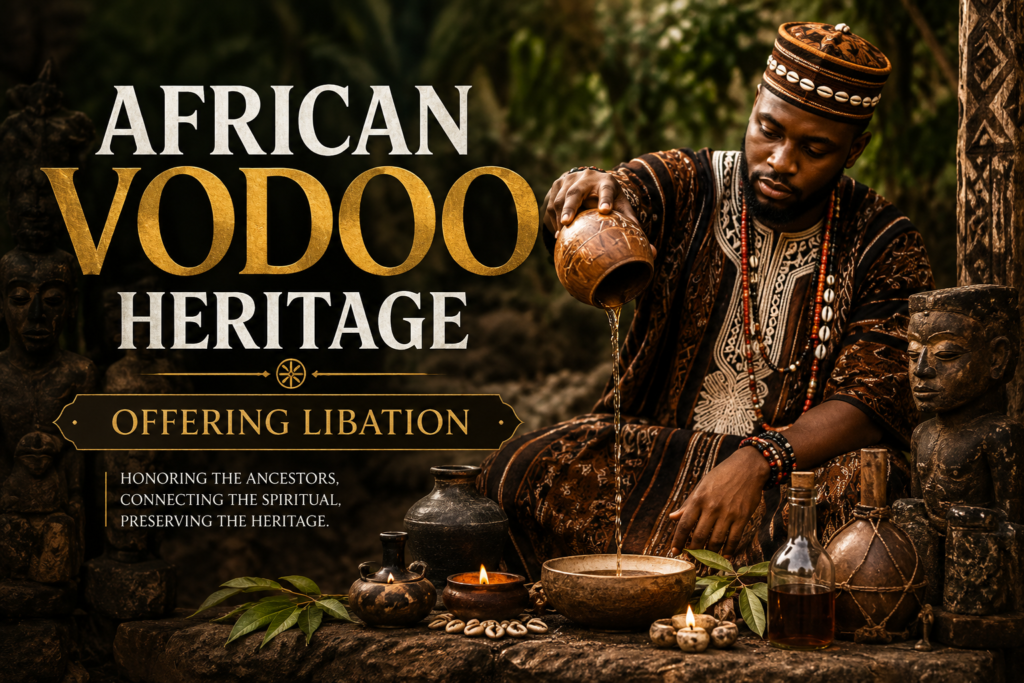
The Vodunon pours a libated stream of water or palm wine at the threshold of the temple, drawing his sacred symbol (Veve or geometric ground drawing). The assembly sings his ancient praise names, requesting that he open the invisible veil separating the material world from the spiritual plane. Without Legba’s linguistic intervention, the prayers of humanity cannot reach the higher pantheons.
Phase 3: The Calling of the Drum (The Houn)
Once the gates are open, the complex science of the drum begins. In Vodun, the drum is not an instrument of entertainment; it is a sacred deity in its own right, known as the Houn. The drumbeats are complex polyrhythms that carry mathematical signatures.
Different Voduns respond to entirely different rhythmic frequencies. A slow, heavy, undulating beat mimics the crawling of a serpent to invite Dan (the rainbow python). A rapid, sharp, syncopated rhythm mimics the striking of lightning to summon Xevioso. The drummers must maintain absolute precision; a single misplaced beat can disrupt the spiritual current and break the invocation.
Phase 4: Possession and Manifestation (The Descent)
When the purification, the geometric symbols, and the drum frequencies reach a state of perfect resonance, the ultimate objective of the ritual is realized: the Vodun descends. This process, often referred to as spirit possession, is deeply misunderstood outside the culture.
In advanced Vodun theology, the human body is viewed as a vessel. During possession, the practitioner’s individual ego temporarily steps aside, allowing a specific cosmic deity to “ride” the vessel (hence the term “horse” or chwal used in the diaspora). The manifesting spirit then walks among the community—healing the sick, dispensing judicial advice, warning against future dangers, and directly comforting the lineage.
The Sacred Tools of Transformation
Every object utilized within a Vodun liturgy has been painstakingly consecrated through secret herbal baths and ancestral prayers. These tools are the physical manifestations of spiritual authority.
1. The Asen (Altar of Forged Iron)
The Asen is a highly sophisticated, hand-wrought iron staff topped with a flat disc featuring intricate silhouettes of animals, human figures, and ancestral symbols. Originating in the Kingdom of Dahomey, the Asen acts as a literal lightning rod for dead ancestors. When libations are poured down the stem of the Asen, the cold iron conducts the energy of the living down into the earth, while simultaneously drawing the consciousness of the ancestors up to speak with their descendants.
2. The Geometric Scripts (Veves and Ground Markings)
Before the advent of Western literacy, West African spiritual systems utilized a complex graphic writing system. During a ritual, the priest uses cornmeal, gunpowder, wood ash, or red earth to draw flawless geometric patterns on the dirt floor. These drawings are called Veves. Each pattern is a visual representation of a specific Vodun’s atomic structure. It acts as a beacon, drawing that specific spirit down from the cosmos into the physical center of the temple.
3. Sacred Libations and Sacrifices
To modern Western sensibilities, the concept of ritual sacrifice is often deeply jarring. However, within advanced indigenous science, sacrifice is understood through the law of the Conservation of Energy.
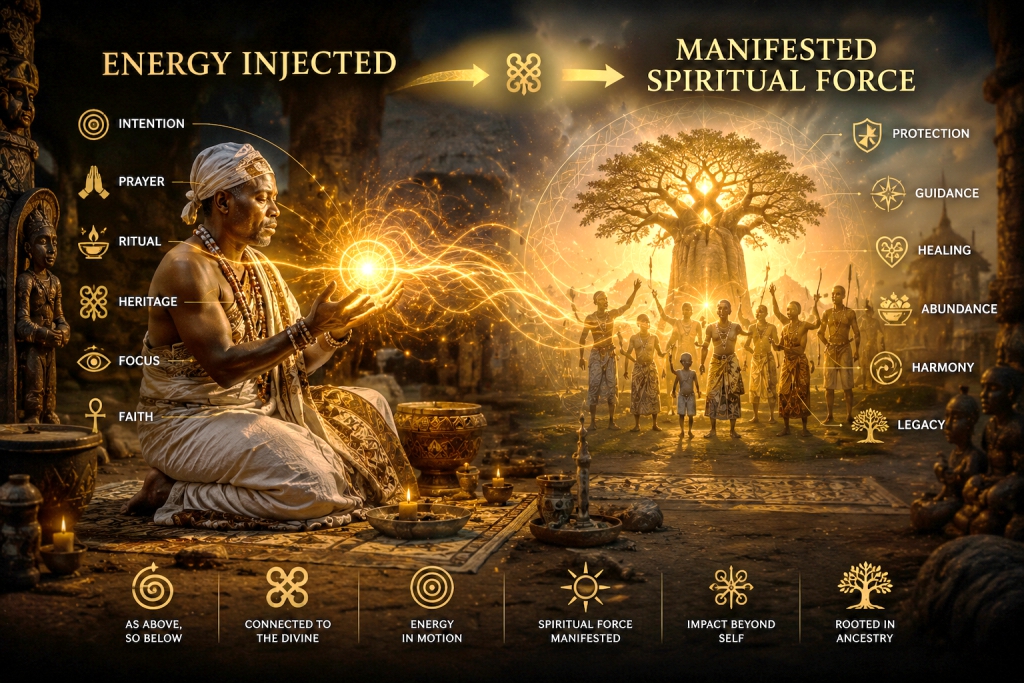
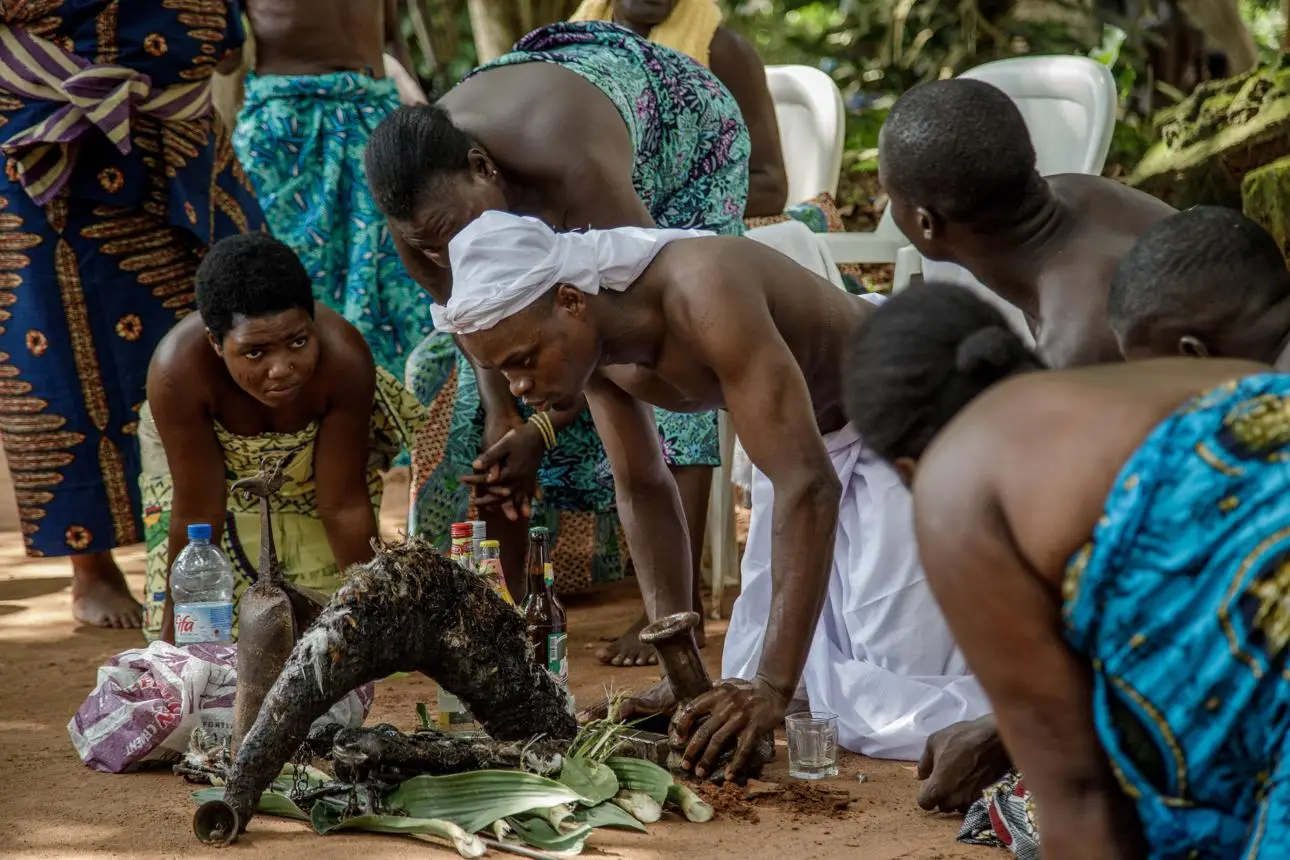
Spiritual entities require vital energy to cross the dense threshold from the invisible realm into the physical world. Libations of palm wine, gin, oil, or food offerings release a subtle vital essence. In larger communal crises, animal sacrifice is performed with absolute reverence.
The animal is treated as a sacred messenger; its life force is offered to feed the spiritual matrix of the village, and its meat is subsequently cooked and distributed to feed the entire community. Nothing is wasted, and nothing is done out of cruelty. It is a profound, solemn exchange of life for life.
Rhythms of Nature and Internal Initiation
1. The Language of the Hidden Forest (The Hounkpame)
The deepest rituals of Vodun are never performed in public. They take place deep within the Hounkpame (the convent or initiatic forest), surrounded by ancient protective walls.
When a person undergoes initiation (Kpodonou), they undergo a psychological death and rebirth. They are stripped of their modern identity, their clothes, and their past names. For months, or even years, they live in seclusion, learning the secret medicinal properties of leaves, the sacred drum languages, and the hidden cosmic names of the deities. When they finally emerge from the forest, they are introduced to the village as entirely new human beings, speaking a secret liturgical tongue and carrying a newly crystallized spiritual shield.
2. The Astrological and Seasonal Clock
Vodun rituals are tightly synchronized with the natural clock of the Earth. Ceremonies are not held arbitrarily.
The Lunar Cycle: Rituals honoring water spirits and divine femininity are perfectly aligned with the wax and wane of the moon to harness tidal energies.
The Solstices and Equinoxes: Major agricultural festivals honoring Sakpata (the earth deity) occur during the changing of seasons, ensuring that human planting cycles harmoniously mirror the internal rest and awakening periods of the planet.
The Modern Adaptation and Global Healing
Shifting from Local Shrines to Global Circles
For centuries, a person had to travel directly to a specific village tree in Benin or Togo to consult a particular oracle. Today, as illustrated by the complex global network, rituals are operating on a global matrix.
High priests in West Africa routinely coordinate with diaspora communities across New York, Salvador da Bahia, and Paris. While the geography has expanded, the technology remains identical: the same drum frequencies, the same geometric ground scripts, and the same absolute devotion to the ancestors continue to bridge the oceanic divide.
Ritual as Ancestral Trauma Healing
In the modern era, Vodun rituals have taken on an additional, vital psychological function: healing the deep-seated wounds of historical slavery and displacement. When members of the African diaspora participate in these ancient liturgical structures, they are not merely performing a religious task. They are actively rewiring their nervous systems, shedding centuries of colonial shame, and stepping back into an ancient, unbroken lineage of spiritual royalty.
📣 Experience the Frequency of the Ancestors
The liturgical ceremonies of Vodun are not meant to be read about in isolation—they are meant to be felt, heard, and experienced. If your soul is calling you to move past theoretical knowledge and witness the profound beauty of our living traditions, your path forward is open.
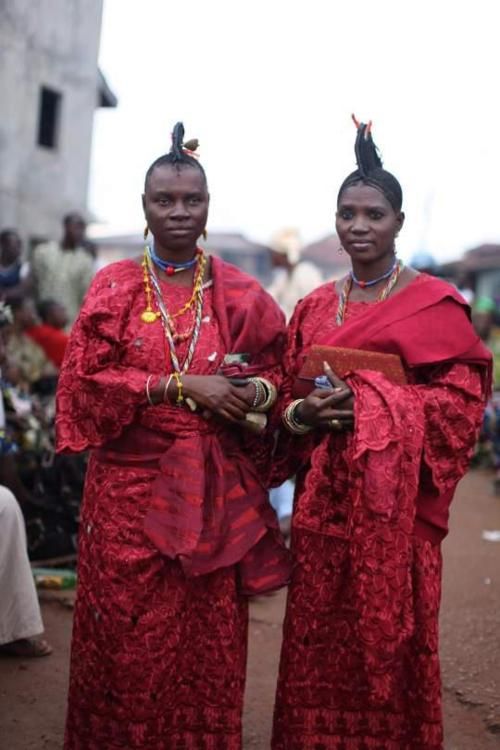
The Role Of Godmothers And Godfathers In African Voodoo Understanding A Sacred Spiritual Tradition