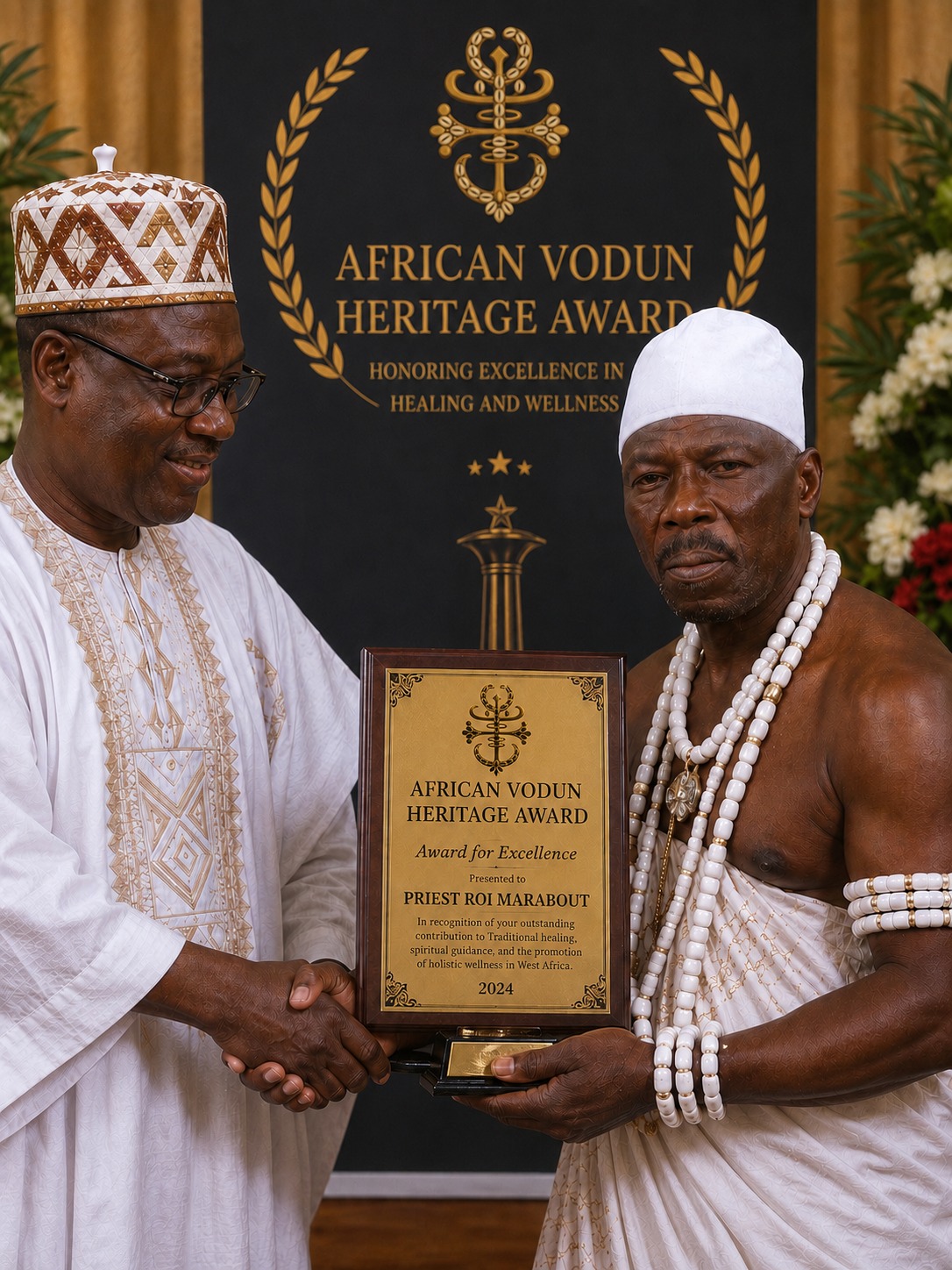
Africa is the birthplace of some of the world’s oldest spiritual traditions, and African Vodun remains one of the continent’s most respected cultural and spiritual heritages. For centuries, communities across Benin and other parts of West Africa have preserved ancestral wisdom through sacred ceremonies, traditional healing, and community leadership. Today, the African Vodun Heritage Award celebrates individuals who have dedicated their lives to protecting this priceless legacy. Among those honored is Priest Roi Marabout, a respected African Voodoo Priest whose lifelong commitment to preserving authentic African traditions has earned recognition throughout West Africa.
The African Vodun Heritage Award is more than a symbol of excellence—it is a celebration of Africa’s living heritage. The award recognizes practitioners who have devoted themselves to preserving traditional knowledge, educating communities, promoting cultural identity, and passing ancestral wisdom to future generations. Through this recognition, the award encourages appreciation for Authentic African Voodoo, traditional ceremonies, indigenous knowledge, and the cultural practices that continue to unite African communities today.
Priest Roi Marabout has become widely known as a respected Traditional African Healer and spiritual practitioner from the Republic of Benin. Throughout his years of service, he has dedicated himself to preserving the values of African Vodun, offering African Spiritual Consultation, sharing ancestral teachings, and promoting peace within communities. His work reflects the belief held in many African traditions that spiritual leaders should serve not only as religious custodians but also as advisers, mediators, educators, and guardians of cultural heritage.
The foundation of African Vodun stretches back hundreds of years to the ancient Kingdom of Dahomey, in present-day Benin. Contrary to many misconceptions portrayed in movies and popular media, Authentic African Voodoo is deeply rooted in respect for the Creator, reverence for ancestors, moral responsibility, family unity, and harmony between humanity and nature. Rather than focusing on sensational myths, African Vodun emphasizes discipline, wisdom, community values, and spiritual balance. These principles continue to inspire millions of people who appreciate Africa’s indigenous spiritual traditions.
Across generations, respected spiritual practitioners have provided African Spiritual Reading and African Spiritual Consultation according to their cultural traditions. These consultations are intended to offer guidance, wisdom, and insight based on traditional beliefs rather than replacing personal responsibility or professional advice. Many individuals seek spiritual guidance during important life events such as marriage, family challenges, career decisions, or periods of uncertainty. For believers, these consultations provide an opportunity for reflection while strengthening their connection to ancestral traditions.
One of the central values within African Vodun is respect for ancestors. In many West African cultures, ancestors are honored as guardians of family history, cultural identity, and moral values. Through African Ancestor Guidance, families remember those who came before them and preserve the lessons they left behind. Ceremonies honoring ancestors reinforce respect for elders, strengthen family unity, and remind younger generations of their cultural responsibilities. This emphasis on ancestral remembrance continues to play an important role in preserving African identity.
Traditional ceremonies remain another important aspect of African Vodun Heritage. Throughout West Africa, communities gather to celebrate births, marriages, harvest festivals, initiations, and ancestral commemorations through African Spiritual Ceremony traditions that have been preserved for centuries. These gatherings are rich in music, dance, storytelling, symbolic dress, and cultural rituals that strengthen community bonds. They serve not only religious purposes but also preserve history, language, art, and traditional values for future generations.
For many believers, African Spiritual Cleansing is viewed as a symbolic practice intended to promote inner renewal, spiritual reflection, and emotional well-being according to traditional customs. Likewise, African Protection Rituals are performed within specific cultural traditions to seek blessings, protection, and spiritual harmony. These practices vary significantly among different ethnic groups and communities throughout Africa. They reflect cultural beliefs and should be understood within their historical and traditional context.
Many traditional practitioners are also recognized for their knowledge of indigenous herbal medicine. African Traditional Medicine has been practiced for centuries using locally available plants, roots, leaves, and natural remedies that have been carefully documented through generations of observation and experience. African Herbal Healing represents one aspect of this broader knowledge system, combining cultural traditions with practical understanding of medicinal plants. While many people value these traditions as part of their cultural heritage, they are distinct from modern evidence-based medicine, which remains essential for diagnosing and treating medical conditions.
The concept of African Energy Healing is also found within certain African spiritual traditions. Practitioners describe it as a way of restoring balance between the individual, the community, nature, and the spiritual world according to their beliefs. Alongside Traditional African Divination, these practices are used by some communities to seek guidance, encourage personal reflection, and strengthen spiritual awareness. Because traditions differ across regions and cultures, methods and beliefs vary widely throughout Africa.
As an experienced African Spiritual Advisor, Priest Roi Marabout continues to promote education about African Vodun while encouraging respect for Africa’s indigenous heritage. His recognition through the African Vodun Heritage Award highlights the importance of preserving authentic cultural traditions in a rapidly changing world. By documenting traditional knowledge, supporting cultural education, and participating in heritage preservation, spiritual leaders help ensure that future generations continue to understand the significance of Africa’s ancient traditions.
One of the greatest challenges facing Authentic African Voodoo today is misinformation. For decades, popular culture has often portrayed African spirituality through myths, stereotypes, and fictional stories that fail to represent its historical depth and cultural importance. Educational initiatives such as the African Vodun Heritage Award help correct these misunderstandings by promoting accurate historical information, encouraging cultural dialogue, and celebrating the positive contributions of traditional spiritual leaders like Priest Roi Marabout.
Young Africans increasingly recognize that preserving traditional heritage does not require rejecting education, science, or technological progress. Instead, they understand that cultural identity provides confidence, belonging, and historical awareness. Learning about African Vodun, participating in cultural festivals, preserving oral history, and respecting ancestral customs all contribute to protecting Africa’s unique heritage while embracing modern opportunities.
Ultimately, the African Vodun Heritage Award represents more than an award—it symbolizes Africa’s commitment to preserving one of the world’s oldest living spiritual traditions. By honoring respected practitioners such as Priest Roi Marabout, recognizing the importance of African Vodun Heritage, and encouraging appreciation for Authentic African Voodoo, the award inspires future generations to value their history, preserve their traditions, and celebrate the remarkable cultural legacy that continues to shape communities across Africa and throughout the African diaspora. Through education, cultural preservation, and responsible stewardship, the wisdom of African ancestors can continue to inspire generations to come.

Mystical Realm of Voodoo Love Spells: What African Voodoo Says About
8 African Voodoo Practitioners Love Spells, Love Magic, and the Search…
Read More
The Role Of Godmothers And Godfathers In African Voodoo Understanding
Across many African spiritual traditions, the relationship between a spiritual…
Read More
The Power Of Offering Libation In Authentic African Voodoo Traditions
Across Africa, one of the oldest and most respected spiritual…
Read More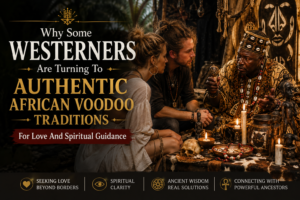
Why Some Westerners Are Turning To Authentic African Voodoo Traditions For
Why Some Westerners Are Turning to Authentic African Voodoo Traditions…
Read More