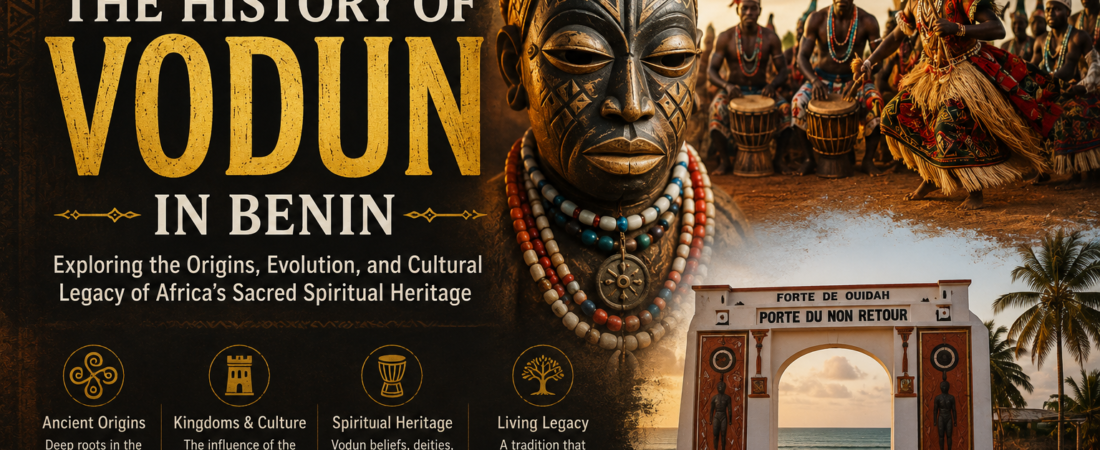
Exploring the Origins, Evolution, and Cultural Legacy of Africa’s Sacred Spiritual Heritage
Among the many civilizations that have shaped the history of Africa, the Republic of Benin stands as one of the most important centers of indigenous spirituality and cultural heritage. Often referred to as the birthplace of African Vodun, Benin has preserved a spiritual tradition that stretches back centuries, surviving kingdoms, colonial rule, the transatlantic slave trade, and the rapid modernization of the contemporary world. Today, African Vodun remains not only a respected spiritual tradition but also an important part of Benin’s national identity, attracting scholars, historians, pilgrims, and tourists from every corner of the globe.
The history of Vodun in Benin is much more than the story of a religion. It is the story of a civilization that developed sophisticated systems of governance, philosophy, art, medicine, environmental stewardship, and community life. Understanding this history allows us to appreciate the depth of African civilization while correcting many misconceptions that have surrounded African Voodoo for generations. Far from the sensationalized portrayals often found in popular culture, Vodun represents a rich cultural heritage rooted in respect for the Creator, ancestors, nature, and community.
The Origins of Vodun in Ancient Benin
The roots of African Vodun can be traced back hundreds of years to the ancient societies that flourished in what is now southern Benin and neighboring regions of Togo, Ghana, and southwestern Nigeria. Long before the arrival of European explorers, Christian missionaries, or Islamic traders in these regions, the people had already developed complex spiritual beliefs that guided every aspect of their daily lives.
Among the Fon, Aja, and related ethnic groups, spirituality was never separated from ordinary existence. Agriculture, leadership, family relationships, justice, health, craftsmanship, and the natural environment were all understood through a spiritual worldview that emphasized harmony between humanity and creation. These beliefs gradually evolved into what is known today as Vodun, a word derived from the Fon language meaning “spirit,” “sacred force,” or “divine presence.”
Unlike many world religions founded by a single individual, African Vodun emerged organically through generations of cultural experience. Elders, spiritual custodians, and traditional leaders preserved this knowledge through oral history, ceremonies, proverbs, songs, and storytelling. This method of passing knowledge from one generation to another ensured that Vodun remained deeply connected to the lives of the people rather than existing solely as a written doctrine.
The Kingdom of Dahomey and the Growth of Vodun
One of the most significant chapters in the history of African Vodun began with the rise of the Kingdom of Dahomey during the seventeenth century. Located in present-day Benin, Dahomey grew into one of West Africa’s most organized and influential kingdoms. Its rulers established sophisticated political institutions, thriving markets, artistic traditions, and military structures that earned recognition throughout the region.
Within the kingdom, Vodun became closely intertwined with public life. Kings worked alongside traditional religious leaders to organize national ceremonies that reinforced unity, social order, and cultural identity. Royal palaces often served not only as political centers but also as places where important cultural and spiritual traditions were preserved.
The annual customs of Dahomey brought together communities in ceremonies that honored ancestors, celebrated harvests, recognized military achievements, and strengthened the relationship between the kingdom and its people. These events demonstrated how deeply Vodun influenced governance, ethics, and public life without separating spirituality from everyday responsibilities.
Vodun as a Way of Life
To understand the history of Vodun in Benin, it is important to recognize that it has always been much more than religious practice. It is a complete cultural system that shapes values, relationships, and community responsibilities.
For generations, Vodun has encouraged respect for elders, hospitality toward visitors, care for the environment, honesty in leadership, and cooperation within families and communities. Traditional leaders often resolved disputes using principles that emphasized reconciliation and communal harmony rather than punishment alone.
Agricultural activities were closely connected to seasonal ceremonies that celebrated the relationship between people and the land. Artisans, blacksmiths, fishermen, hunters, and farmers all preserved customs that reflected gratitude for the natural resources upon which their livelihoods depended.
This integration of spirituality with everyday life allowed Vodun to remain relevant across changing historical periods because it addressed not only religious questions but also practical aspects of human society.
The Role of Oral Tradition
One of the greatest strengths of African Vodun tradition has been its reliance on oral knowledge. Before widespread literacy, elders served as living libraries, preserving centuries of history through storytelling, songs, poetry, proverbs, and ceremonial teachings.
Every generation learned about the origins of their people, the achievements of great leaders, the responsibilities of family members, and the moral values expected within the community. This educational system ensured that history remained alive through memory rather than depending exclusively on written documents.
Today, historians recognize oral tradition as one of Africa’s most valuable intellectual resources. Much of what is known about early Vodun practices has been preserved through these remarkable traditions of storytelling that continue to be practiced in many communities throughout Benin.
The Transatlantic Slave Trade and the Spread of Vodun
One of the most difficult periods in Benin’s history came during the transatlantic slave trade. Between the sixteenth and nineteenth centuries, millions of Africans were forcibly removed from West Africa and transported across the Atlantic.
Many of those taken from the region carried with them their languages, customs, music, and spiritual beliefs. Although separated from their homeland under tragic circumstances, they continued to preserve elements of African Vodun wherever they settled.
Over time, these traditions influenced the development of spiritual systems such as Haitian Vodou, Louisiana Voodoo, Cuban Vodú, and aspects of Brazilian Candomblé. While each evolved independently according to local cultures and historical circumstances, they all share historical connections to the indigenous traditions of West Africa.
This remarkable survival demonstrates the resilience of African culture despite one of history’s greatest human tragedies.
Colonial Rule and the Preservation of Tradition
The arrival of European colonial powers introduced profound political, religious, and social changes throughout West Africa. Christian missionaries established churches and schools, while colonial administrations often discouraged or misunderstood indigenous spiritual traditions.
Despite these pressures, many communities continued to preserve Vodun practices within families and villages. Elders quietly maintained ceremonies, oral traditions, and cultural customs even during periods when indigenous beliefs received little official recognition.
Rather than disappearing, Vodun adapted to changing circumstances while maintaining its essential values. In many communities, cultural identity remained inseparable from ancestral traditions, ensuring their survival into the modern era.
Benin’s Independence and the Recognition of Vodun
When Benin gained independence from France in 1960, efforts gradually increased to recognize and celebrate the country’s indigenous cultural heritage. Historians, artists, educators, and traditional leaders began documenting customs that had long been preserved through oral tradition.
A landmark moment came in 1996, when the government of Benin officially recognized Vodun as one of the country’s traditional religions. This recognition affirmed the importance of indigenous spirituality as part of Benin’s national identity and cultural legacy.
Today, Vodun enjoys legal recognition alongside other religions practiced within the country, reflecting Benin’s commitment to religious freedom and cultural diversity.
National Vodun Day: A Celebration of Heritage
Every year on January 10, Benin celebrates National Vodun Day, one of the country’s most important cultural events. Thousands of people gather in the historic coastal city of Ouidah, widely regarded as one of the spiritual centers of African Vodun.
The celebration features traditional music, dance, historical exhibitions, cultural performances, storytelling, artistic displays, and educational activities that showcase the richness of Benin’s heritage.
For many visitors, National Vodun Day provides an opportunity to experience authentic African traditions while learning directly from community leaders, historians, artists, and cultural custodians. The event also encourages intercultural dialogue by welcoming people of different backgrounds who wish to better understand African history.
Ouidah: The Spiritual Capital of Vodun
Few places are as closely associated with African Vodun as the historic city of Ouidah. Located along Benin’s Atlantic coast, Ouidah played a significant role in both the history of Vodun and the transatlantic slave trade.
Today, the city serves as a major cultural destination where visitors can explore museums, historical monuments, sacred forests, traditional shrines, and memorial sites that preserve important chapters of African history.
The Sacred Forest of Kpassè, the Temple of Pythons, and the Route of the Slaves are among Ouidah’s best-known cultural landmarks. Together, these sites tell the story of resilience, remembrance, and the enduring importance of preserving African heritage for future generations.
Vodun’s Influence on Art, Music, and Culture
Throughout Benin, the influence of Vodun extends beyond spirituality into nearly every aspect of cultural expression. Traditional sculptures, carved masks, textiles, beadwork, pottery, architecture, music, and dance all reflect centuries of artistic development inspired by indigenous beliefs.
Ceremonial drums preserve rhythms that have been transmitted across generations, while oral poetry continues to celebrate historical events and ancestral wisdom. Local artisans create works that not only display exceptional craftsmanship but also preserve cultural symbols that define Benin’s identity.
This artistic legacy has attracted international recognition, inspiring exhibitions, academic research, and collaborations that highlight the richness of African creativity.
Vodun in Modern Benin
Modern Benin is a diverse nation where Christianity, Islam, and indigenous religions coexist peacefully. Within this multicultural society, Vodun continues to play an important role in preserving cultural identity while adapting to contemporary life.
Universities study its philosophy and history. Museums preserve its artistic heritage. Cultural organizations organize festivals that celebrate traditional knowledge. Young researchers use digital technology to document oral histories, ensuring that ancient wisdom remains accessible to future generations.
This balance between tradition and modernity demonstrates that indigenous knowledge continues to have relevance in the twenty-first century.
Why the History of Vodun Matters Today
Understanding the history of Vodun in Benin is essential for anyone seeking to appreciate Africa’s contribution to world civilization. It challenges outdated stereotypes while revealing a sophisticated tradition rooted in ethics, environmental awareness, community leadership, and cultural continuity.
The story of Vodun reminds us that Africa possesses some of the world’s oldest intellectual and spiritual traditions. It encourages respect for cultural diversity and highlights the importance of preserving indigenous knowledge systems that continue to enrich humanity.
As more people travel to Benin, study African history, or explore their ancestral heritage, learning about Vodun offers a meaningful way to engage with one of the continent’s most enduring cultural treasures.
Why the History of Vodun Matters Today
Understanding the history of Vodun in Benin is essential for anyone seeking to appreciate Africa’s contribution to world civilization. It challenges outdated stereotypes while revealing a sophisticated tradition rooted in ethics, environmental awareness, community leadership, and cultural continuity.
The story of Vodun reminds us that Africa possesses some of the world’s oldest intellectual and spiritual traditions. It encourages respect for cultural diversity and highlights the importance of preserving indigenous knowledge systems that continue to enrich humanity.
As more people travel to Benin, study African history, or explore their ancestral heritage, learning about Vodun offers a meaningful way to engage with one of the continent’s most enduring cultural treasures.
The history of African Vodun in Benin is a story of resilience, identity, and continuity. From its ancient origins among the Fon and Aja peoples to its role in the Kingdom of Dahomey, from surviving the transatlantic slave trade and colonial rule to becoming a celebrated part of modern Benin’s national identity, Vodun has remained a living expression of African heritage.
Today, it continues to inspire scholars, artists, travelers, and cultural enthusiasts who seek a deeper understanding of Africa’s indigenous traditions. By exploring the authentic history of Vodun, we move beyond myths and misconceptions to discover a legacy built on respect for the Creator, reverence for ancestors, harmony with nature, and the enduring strength of community. Benin’s Vodun tradition is not only a cornerstone of West African culture but also a remarkable chapter in the shared history of humanity.
Find out more about…

Mystical Realm of Voodoo Love Spells: What African Voodoo Says About Love Spell Rituals and Finding a Soulmate