Introduction to Authentic African Spiritual Traditions
For centuries, Authentic African Spiritual Traditions have played a significant role in shaping the cultural, social, and spiritual identity of communities across West Africa. Among these traditions, West Africa Voodoo Traditions stand out as one of the most respected and misunderstood spiritual systems in the world.
Far from the myths often portrayed in movies and popular culture, authentic Voodoo is deeply rooted in ancestral wisdom, community values, healing practices, respect for nature, and spiritual guidance. Today, many people worldwide are seeking to understand the true meaning of African spirituality and how these ancient traditions continue to positively influence modern society.
This article explores the history, principles, practices, and positive impact of Authentic African Spiritual Traditions in West Africa, offering a deeper understanding of one of humanity’s oldest spiritual heritage systems.
Understanding West Africa Voodoo Traditions
West Africa Voodoo Traditions originated thousands of years ago among various ethnic groups in countries such as:
- Benin
- Togo
- Ghana
- Nigeria
The word “Voodoo” is derived from the Fon language term “Vodun,” which means spirit, deity, or sacred force. In its authentic form, Vodun is a complex spiritual tradition that emphasizes harmony between the physical and spiritual worlds.
If your goal is educational and culturally respectful, it is better to describe what believers report experiencing rather than present spiritual claims as proven facts.
Millions of people across West Africa continue to practice Vodun as part of their daily lives, preserving ancient customs that have been passed down through generations. For many practitioners, Vodun is not merely a religion but a living spiritual tradition that provides guidance, hope, and a deep connection to their ancestors. Believers often describe feeling blessed through improved community support, stronger family bonds, spiritual protection, emotional healing, personal confidence, and a greater sense of purpose in life. Through prayers, ceremonies, and ancestral reverence, many followers believe the Vodun spirits help them navigate life’s challenges, encourage wisdom in decision-making, and strengthen their relationship with both the spiritual and physical worlds. These traditions continue to inspire faith, resilience, gratitude, and cultural pride among communities throughout West Africa and the African diaspora.
Millions of people across West Africa continue to practice Vodun as part of their daily lives, preserving sacred traditions that have endured for centuries. Followers of Authentic African Spiritual Traditions often believe that the Vodun spirits bring blessings in many forms, including spiritual guidance, protection, prosperity, wisdom, healing, harmony, and personal transformation. Many practitioners share testimonies of overcoming difficulties, restoring family relationships, finding inner peace, and strengthening their connection to ancestral wisdom through their faith. Within West Africa Voodoo Traditions, the spirits are often viewed as benevolent forces that help individuals maintain balance, develop moral character, and achieve success while remaining connected to their cultural heritage. For countless believers, Vodun represents a source of strength, hope, and divine support that enriches both individual lives and entire communities.
Unlike common misconceptions, traditional Vodun is not centered on fear or harm. Instead, it promotes balance, healing, moral responsibility, and respect for ancestors.
The Core Principles of Authentic African Spiritual Traditions
1. Respect for Ancestors
One of the foundational beliefs within Authentic African Spiritual Traditions is the reverence for ancestors.
Ancestors are viewed as spiritual guides who continue to influence and protect their descendants. Families honor their ancestors through prayers, ceremonies, and remembrance rituals that strengthen family bonds and cultural continuity.
This practice encourages individuals to appreciate their heritage and maintain strong connections with their roots.
2. Harmony with Nature
Traditional African spirituality teaches that nature is sacred.
Rivers, forests, mountains, and natural elements are often regarded as manifestations of divine energy. Many spiritual practices focus on living in balance with the environment and respecting natural resources.
These teachings promote environmental stewardship and sustainable living, values that remain highly relevant in today’s world.
3. Community and Unity
West Africa Voodoo Traditions emphasize collective well-being over individual success.
Ceremonies, festivals, and community gatherings bring people together to celebrate life, solve conflicts, and strengthen social relationships. This sense of unity helps foster resilience and mutual support within communities.
4. Spiritual Healing
Traditional healers often combine spiritual knowledge with indigenous medicinal practices to support physical, emotional, and spiritual well-being.
Healing rituals may involve prayers, herbal remedies, counseling, and community support systems designed to restore balance in a person’s life.
The Rich History of West Africa Voodoo Traditions
The history of Vodun stretches back thousands of years. Long before the arrival of foreign religions in West Africa, communities developed sophisticated spiritual systems that explained the relationship between humanity, nature, and the divine.
The Kingdom of Dahomey, located in present-day Benin, played a significant role in preserving and spreading Vodun traditions. Religious leaders, priests, and priestesses maintained sacred knowledge and ensured its transmission to future generations.
Despite periods of colonization and cultural suppression, Vodun survived because communities remained committed to preserving their spiritual heritage.
Today, many cultural institutions, scholars, and practitioners work to educate the public about the authentic history of West African spirituality.
Positive Effects of Authentic African Spiritual Traditions
Preserving Cultural Identity
One of the greatest contributions of Authentic African Spiritual Traditions is cultural preservation.
Through storytelling, ceremonies, music, dance, and oral history, communities pass valuable knowledge from one generation to the next.
These traditions help people maintain a strong sense of identity in an increasingly globalized world.
Strengthening Family Values
Ancestor reverence encourages respect for elders and family responsibilities.
Children learn the importance of honoring their parents, grandparents, and community leaders, creating stronger family structures and intergenerational relationships.
Promoting Mental and Emotional Well-Being
Many traditional spiritual practices include meditation, prayer, reflection, and communal support.
These activities can provide emotional comfort during difficult times and help individuals develop resilience, purpose, and inner peace.
Encouraging Social Responsibility
Authentic African spirituality teaches that personal actions affect the wider community.
Individuals are encouraged to act with honesty, integrity, and compassion, contributing positively to society.
Inspiring Environmental Conservation
The sacred relationship between humanity and nature encourages environmental protection.
Many traditional communities maintain sacred forests, rivers, and natural sites that contribute to biodiversity conservation and ecological sustainability.
Traditional Ceremonies and Their Meaning
Ancestral Celebrations
Ancestral ceremonies provide opportunities for families to honor their lineage and express gratitude for guidance received from previous generations.
These events often include:
- Traditional music
- Drumming
- Dance performances
- Storytelling
- Community feasts
Spiritual Festivals
Across West Africa, annual festivals celebrate spiritual heritage and cultural unity.
These gatherings attract visitors from around the world who wish to learn about authentic African traditions and experience their vibrant cultural expressions.
Healing Ceremonies
Healing ceremonies are conducted to restore balance and harmony in an individual’s life.
Traditional practitioners may incorporate prayer, herbal knowledge, symbolic rituals, and community participation to support holistic wellness.
The Global Influence of West Africa Voodoo Traditions
The influence of West Africa Voodoo Traditions extends far beyond the African continent.
Through migration and the African diaspora, Vodun-inspired traditions evolved in regions including:
- Haiti
- Brazil
- Cuba
- Trinidad and Tobago
Elements of African spirituality influenced music, art, literature, dance, and cultural identity throughout the Americas and beyond.
Today, scholars, cultural historians, and spiritual seekers continue to study these traditions to gain a deeper appreciation of African heritage and indigenous knowledge systems.
Common Misconceptions About Voodoo
Myth: Voodoo Is Evil
This is one of the most widespread misconceptions.
Authentic Vodun focuses on spiritual balance, community harmony, healing, and respect for ancestors. Like many religious traditions, its core teachings emphasize ethical behavior and social responsibility.
Myth: Voodoo Is Only About Magic
While spiritual rituals exist, Vodun encompasses much more than ritual practice.
It includes philosophy, ethics, cultural identity, community governance, healing traditions, and ancestral remembrance.
Myth: Voodoo Has No Historical Foundation
In reality, Vodun possesses a rich documented history and remains an important cultural institution across West Africa.
Its traditions have survived for centuries and continue to be practiced by millions of people.
Why Interest in Authentic African Spiritual Traditions Is Growing
In recent years, global interest in African spirituality has increased significantly.
People are seeking:
- Authentic cultural knowledge
- Indigenous wisdom traditions
- Ancestral heritage research
- Holistic wellness approaches
- Spiritual connections with nature
- Historical understanding of African civilizations
As more educational resources become available, many individuals are discovering the depth, complexity, and positive values embedded within traditional African spiritual systems.
The Future of West Africa Voodoo Traditions
The future of Authentic African Spiritual Traditions depends on cultural preservation, education, and respectful representation.
Communities across West Africa continue to safeguard sacred knowledge through:
- Cultural festivals
- Educational programs
- Historical research
- Heritage preservation projects
- Community leadership initiatives
Digital platforms are also helping younger generations learn about their traditions while sharing accurate information with global audiences.
As awareness grows, these ancient spiritual systems are increasingly recognized as valuable sources of cultural heritage, historical knowledge, and community wisdom.
Authentic African Spiritual Traditions and West Africa Voodoo Traditions represent a rich spiritual heritage that has shaped societies for generations. Rooted in ancestral wisdom, community unity, respect for nature, and holistic well-being, these traditions continue to positively influence millions of people across Africa and around the world.
Beyond the stereotypes and misconceptions, authentic Vodun offers valuable lessons about cultural identity, environmental stewardship, family values, spiritual balance, and social harmony. By learning about these traditions with respect and openness, we gain a deeper appreciation for Africa’s remarkable cultural legacy and its enduring contribution to global civilization.

Mystical Realm of Voodoo Love Spells: What African Voodoo Says About Love Spell Rituals and Finding a Soulmate
8 African Voodoo Practitioners Love Spells, Love Magic, and the Search…
Read More
The Role Of Godmothers And Godfathers In African Voodoo Understanding A Sacred Spiritual Tradition
Across many African spiritual traditions, the relationship between a spiritual…
Read More
The Power Of Offering Libation In Authentic African Voodoo Traditions Understanding A Sacred Spiritual Practice
Across Africa, one of the oldest and most respected spiritual…
Read More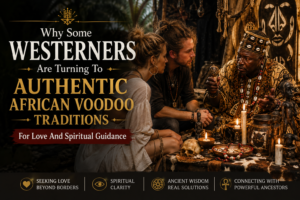
Why Some Westerners Are Turning To Authentic African Voodoo Traditions For Love And Spiritual Guidance
Why Some Westerners Are Turning to Authentic African Voodoo Traditions…
Read More