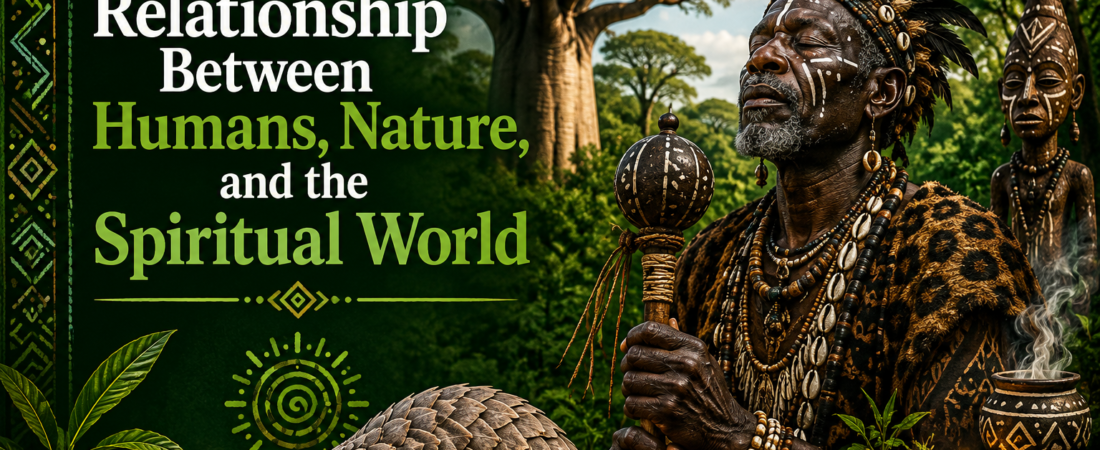
For thousands of years, African societies have viewed the world as a place where everything is deeply connected. Human beings, nature, and the spiritual world are not seen as separate or competing forces but as parts of one living system that depends on balance and mutual respect. This understanding has shaped the customs, beliefs, and traditions of many African communities, especially within the Vodun heritage of Benin and other parts of West Africa.
Unlike modern perspectives that often separate the physical world from the spiritual one, traditional African beliefs teach that life is interconnected. Mountains, rivers, forests, animals, and even the changing seasons are often viewed as part of a greater natural order. People are encouraged to live in harmony with their surroundings, recognizing that the wellbeing of individuals, families, communities, and nature are closely linked.
Understanding the relationship between humans, nature, and the spiritual world offers valuable insight into the values that have guided African societies for generations. It reveals a worldview centered on respect, responsibility, gratitude, and coexistence—principles that remain meaningful in today’s rapidly changing world.
A World Built on Connection
One of the defining features of African traditional beliefs is the idea that life is interconnected. Every living thing exists within a larger system where each part depends on the others. Human beings rely on the land for food, water, and shelter, while nature provides the resources necessary for survival. At the same time, people have a responsibility to care for the environment so that future generations can continue to benefit from it.
Within the Vodun tradition, this connection extends beyond the visible world. The physical environment and the spiritual realm are understood as existing alongside one another, influencing daily life in ways that encourage respect rather than fear. This perspective teaches that maintaining harmony with nature is also part of maintaining harmony with the spiritual order.
Rather than seeing themselves as owners of the earth, many traditional African communities consider themselves caretakers. The land is inherited from previous generations and preserved for those who will come after. This belief encourages responsible use of natural resources and reminds people that their actions affect both the present and the future.
Nature as a Sacred Gift
Nature occupies a place of great importance within African spiritual traditions. Forests, rivers, lakes, hills, and ancient trees are often respected because they provide life, shelter, and nourishment. Their value goes beyond their physical usefulness, as they also represent continuity, renewal, and the enduring relationship between humanity and the natural world.
In many communities, sacred forests have been protected for centuries because they hold cultural and spiritual significance. These places often serve as locations for ceremonies, reflection, and community gatherings. Their preservation has also benefited wildlife and biodiversity, demonstrating how traditional beliefs can contribute to environmental conservation.
Water is another powerful symbol within many African traditions. Rivers and springs support agriculture, sustain communities, and represent purification and renewal. Respecting these natural resources encourages people to protect them from pollution and overuse, recognizing that healthy ecosystems are essential for healthy communities.
Humanity’s Responsibility Toward Nature
The relationship between humans and nature is not viewed as one-sided. While people depend on nature for survival, they are also expected to care for it with wisdom and restraint. Traditional teachings often remind individuals that taking from the environment should always be balanced by gratitude and responsible stewardship.
This principle is reflected in agricultural practices, community customs, and seasonal celebrations. Harvest festivals, for example, often express appreciation for the abundance provided by the land while recognizing the hard work of farmers and the importance of preserving fertile soil for future harvests.
These values remain relevant today as many parts of the world face challenges such as deforestation, climate change, and environmental degradation. The traditional emphasis on balance offers an important reminder that human prosperity cannot be separated from the health of the natural environment.
The Spiritual World in African Tradition
Many African cultures believe that the physical world is only one aspect of reality. Alongside it exists a spiritual dimension that influences life in ways that cannot always be seen. This understanding does not necessarily suggest that every natural event has a supernatural explanation. Rather, it reflects the belief that life includes both visible and invisible dimensions that exist in harmony.
Within the Vodun tradition, the Supreme Creator is recognized as the ultimate source of life. Spiritual beings associated with different aspects of creation are understood as part of the natural order, while ancestors are remembered as respected members of the extended family whose wisdom continues to inspire future generations.
This perspective encourages people to approach life with humility. It reminds individuals that human knowledge has limits and that respect should be shown not only toward other people but also toward the natural world that sustains all life.
The Role of Ancestors in Maintaining Balance
Ancestors occupy an important place within the relationship between humans, nature, and the spiritual world. They are remembered as individuals who lived before the current generation and whose experiences continue to influence family life through memory, tradition, and cultural values.
By preserving family history and honoring previous generations, communities maintain a sense of continuity that connects the past with the present. Ancestors represent the wisdom accumulated over many generations, encouraging descendants to make thoughtful decisions that benefit both their families and society.
This connection also reinforces the idea that every generation has responsibilities. Just as people inherit traditions from their ancestors, they are expected to preserve those traditions and pass them on to future generations in ways that strengthen community life.
Sacred Places and Their Importance
Throughout Benin and other parts of West Africa, certain locations are regarded as culturally significant because of their historical or spiritual importance. Sacred forests, ancient trees, rivers, hills, and shrines often become places where communities gather for ceremonies, reflection, and cultural celebrations.
These locations serve as reminders of the close relationship between nature and spiritual life. Protecting them is not only an act of cultural preservation but also an expression of respect for the environment itself. Many sacred forests have survived for generations because communities recognized their importance long before modern conservation efforts began.
Today, these sites continue to attract visitors interested in learning about African heritage while highlighting the role traditional beliefs have played in protecting natural landscapes.
Lessons That Nature Teaches
Nature has always been one of humanity’s greatest teachers. The changing seasons demonstrate the importance of patience, rivers illustrate persistence through constant movement, while trees symbolize growth, resilience, and continuity. African traditional wisdom often uses these natural examples to teach valuable lessons about life.
Communities learn that balance is essential. Excessive exploitation of natural resources can lead to hardship, while caring for the environment creates conditions for future prosperity. These teachings encourage moderation, gratitude, and respect for all forms of life.
Such lessons remain highly relevant in today’s world, where environmental sustainability has become a global concern. The traditional understanding that humanity and nature depend upon one another continues to offer practical guidance for modern society.
Harmony Rather Than Domination
One of the central ideas within African traditional beliefs is that people should seek harmony rather than domination. Instead of viewing nature merely as a resource to exploit, it is seen as a partner in sustaining life. This perspective encourages cooperation with the environment rather than control over it.
Living in harmony involves respecting natural cycles, protecting wildlife, conserving forests, and recognizing the importance of clean water and fertile land. These values help communities build sustainable ways of living that benefit both people and the environment.
By promoting coexistence rather than exploitation, traditional teachings encourage long-term thinking and responsible decision-making that extends beyond individual interests.
Why This Relationship Still Matters Today
Modern society has achieved remarkable technological progress, yet many environmental challenges continue to grow. Climate change, pollution, habitat destruction, and declining biodiversity remind us that human wellbeing remains closely connected to the health of the natural world.
The traditional understanding of the relationship between humans, nature, and the spiritual world offers valuable lessons for contemporary life. It encourages people to respect cultural heritage while recognizing the importance of environmental responsibility. Although different communities may express these ideas in different ways, the underlying message remains remarkably consistent: humanity flourishes when it lives in balance with nature.
This philosophy also promotes respect between cultures. Learning how different societies understand the relationship between people and the environment helps broaden our appreciation for the diversity of human knowledge and encourages meaningful dialogue across traditions.
The relationship between humans, nature, and the spiritual world is one of the foundational principles of African traditional beliefs and the Vodun heritage of Benin. Rather than separating humanity from the environment or the spiritual dimension of life, these traditions emphasize connection, balance, and mutual responsibility.
Nature is respected as the source of life, ancestors are remembered as guardians of wisdom and cultural identity, and the spiritual world reminds people that life extends beyond what can be seen. Together, these relationships create a worldview that values gratitude, respect, community, and environmental stewardship.
In an age when many societies are seeking sustainable ways of living, the wisdom preserved within African traditions continues to offer meaningful insights. By understanding the interconnectedness of humans, nature, and the spiritual world, we not only gain a deeper appreciation of African cultural heritage but also discover timeless values that encourage harmony, responsibility, and respect for all life.